


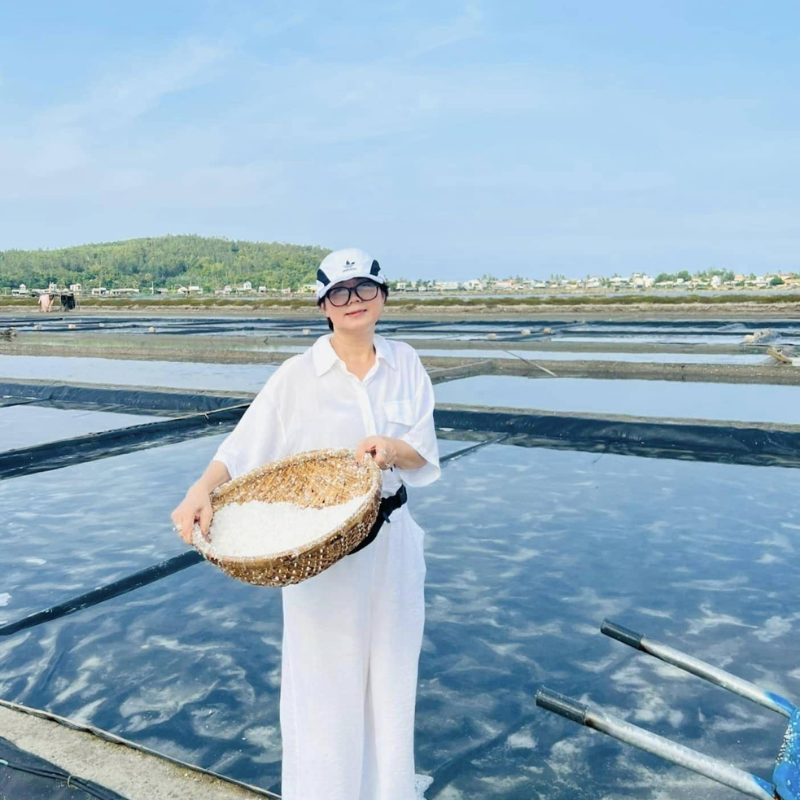

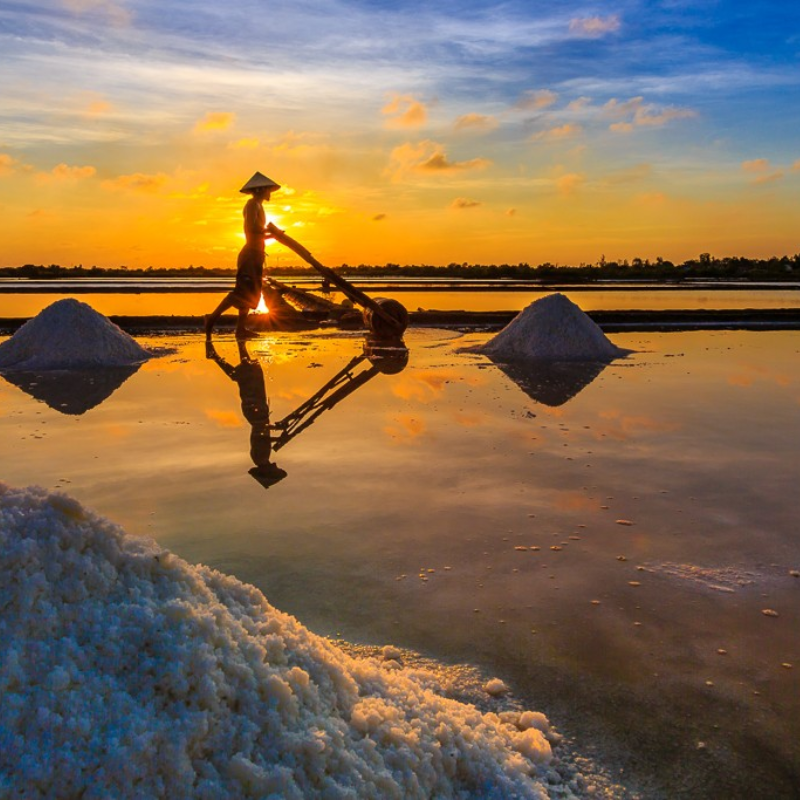
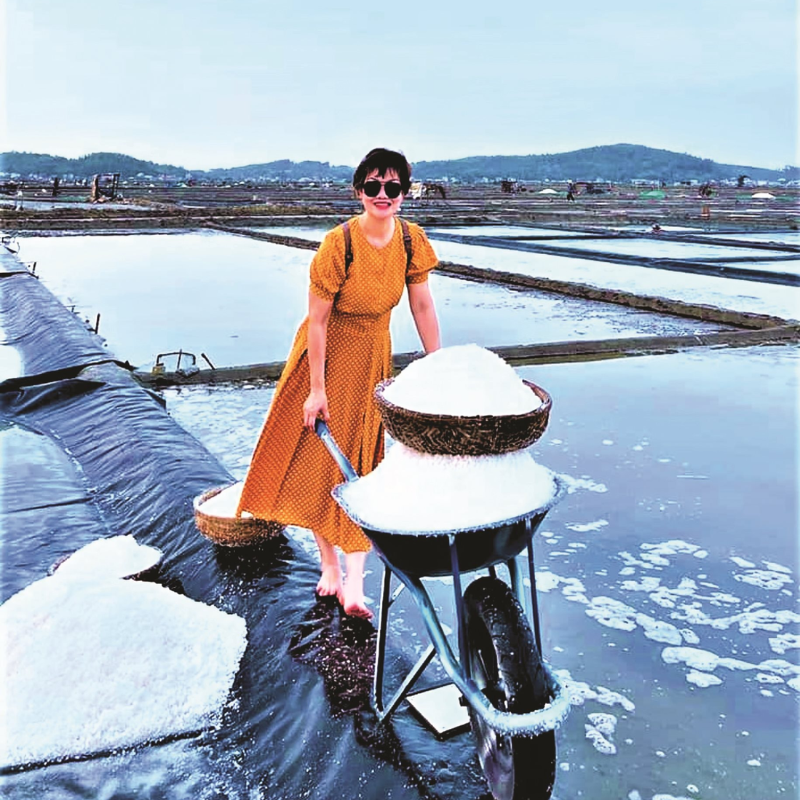

Have you ever set foot on a seemingly endless salt field, where pristine white salt crystals shimmer under the sun like precious gems? If not, join Us, Localtrips.ORG, to discover the simple yet charming beauty of Sa Huynh Salt Field, one of the oldest Sa Huynh salt production areas and a source of pride for the people of Quang Ngai.
Introduction to Sa Huynh Salt Field, Where Is It Located?

Sa Huynh Salt Field is located in Pho Thanh Commune, Duc Pho District, Quang Ngai Province. This is not only one of the largest salt fields in Vietnam but also a traditional Vietnamese craft village with over 200 years of history. To help our guests easily visualize where Sa Huynh Salt Field is, it is situated right next to National Highway 1A, about 60km south of Quang Ngai city center. With this convenient location, you can easily find and admire the unique beauty of the Sa Huynh salt pans.
History of Sa Huynh Salt Field Formation

The history of Sa Huynh salt field has gone through many ups and downs alongside its local people. According to historical records, salt production in Sa Huynh dates back to the 19th century, possibly even earlier. Initially, the lives of the people were fraught with difficulties, as the value of Sa Huynh salt was not high, and the effort put in was not always adequately rewarded. In fact, it was once known as the "bitter salt village."
However, with persistent effort and continuous dedication, the people of Sa Huynh gradually affirmed the quality and value of their products. A significant turning point in the history of Sa Huynh salt field was in 2011, when Sa Huynh Salt was granted certification by the Intellectual Property Office. This opened a new chapter for the Sa Huynh salt industry, as people began to invest in new production technologies, applying salt-making models on tarp or cement foundations. As a result, the quality of Sa Huynh salt significantly improved, impurities decreased by up to 95%, production increased, and value also rose by 20-30%.
These improvements in the Sa Huynh salt production process, along with the construction of more than 5km of dikes, have not only transformed the landscape but also significantly improved the lives of the people in Sa Huynh salt village. We are incredibly proud to witness this positive change, a testament to the learning spirit and determination of the people of Sa Huynh.
Who Usually Visits Sa Huynh Salt Field and Why?

Sa Huynh Salt Field today is not only a place for Sa Huynh salt production but also an attractive destination for various types of tourists:
- Domestic tourists: They come to discover a unique Quang Ngai tourist destination, learn about the culture of Sa Huynh salt field and the traditional salt making craft in Sa Huynh.
- International tourists: International visitors who enjoy exploring traditional Vietnamese craft villages and want to learn about local cultural life are often very interested in Sa Huynh Salt Field.
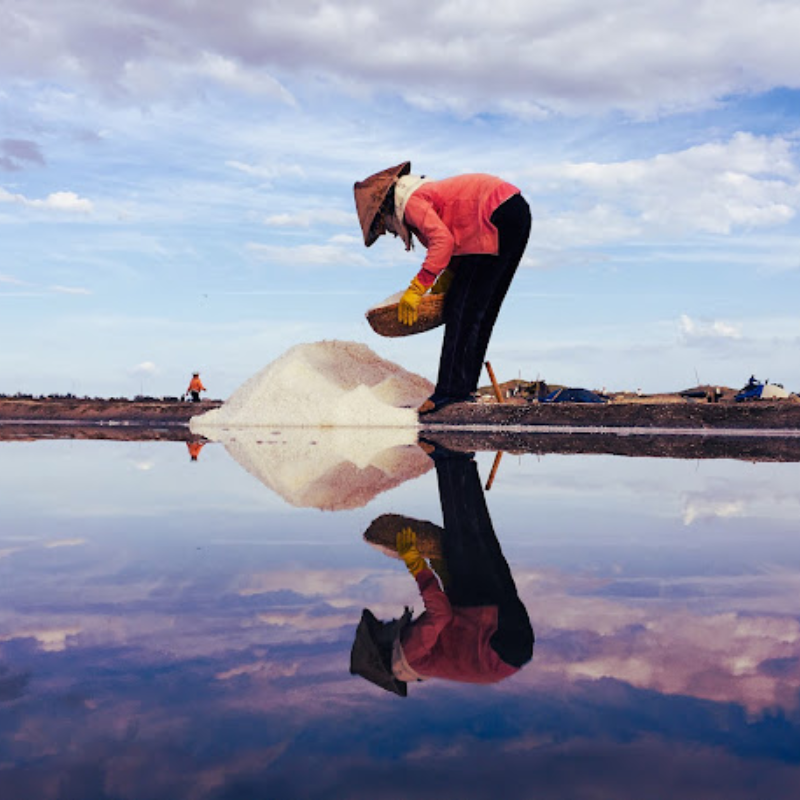
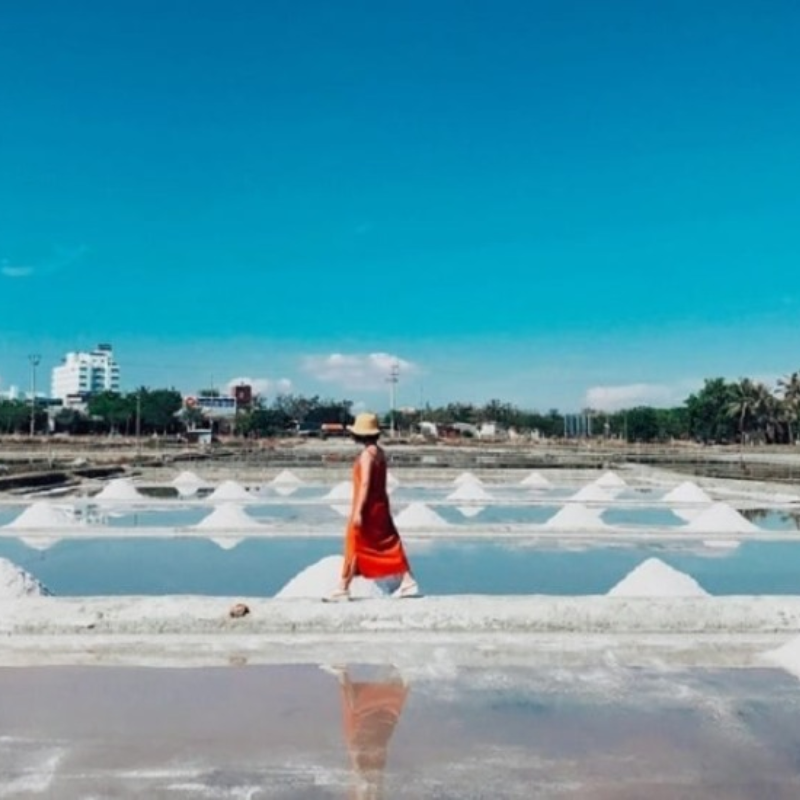
- Photographers and photography enthusiasts: The surreal beauty of the Sa Huynh salt pans with their pristine white squares reflecting the sunlight creates incredibly impressive scenes. I remember the first time I saw images of Sa Huynh salt field, I was overwhelmed by its simple yet captivating beauty.
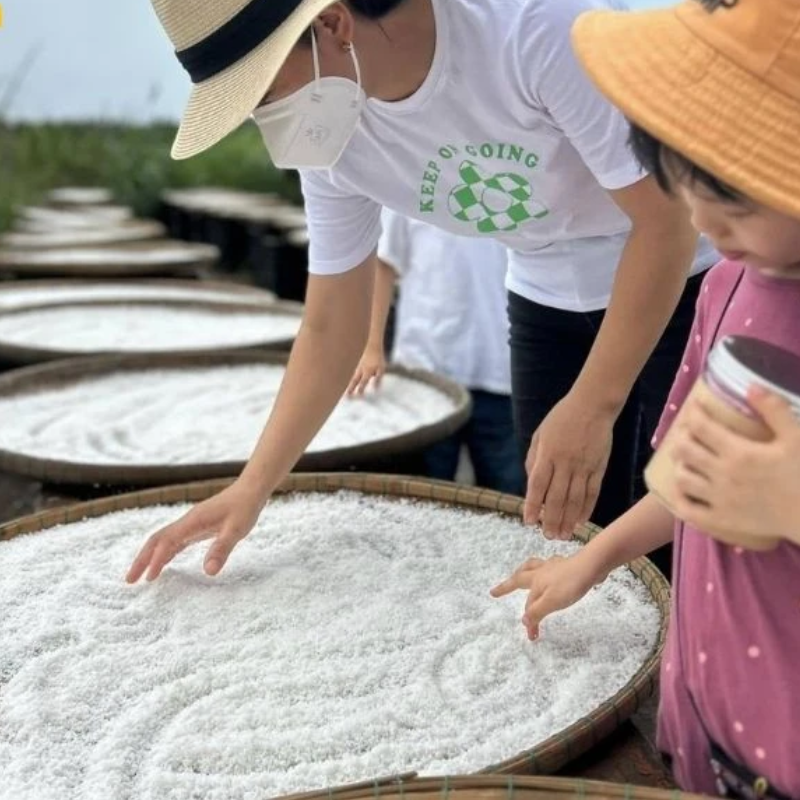
- Students: They often come here to learn about the Sa Huynh salt production process and gain practical experience with a traditional craft.
- Those interested in Quang Ngai agricultural products: They may come to learn about the quality of Sa Huynh salt and where to buy Sa Huynh salt.
The purposes of these visits are diverse, ranging from Sa Huynh salt field tourism, cultural exploration, to capturing beautiful moments and purchasing Sa Huynh specialties (related to salt).
How to Get to Sa Huynh Salt Field Tourist Spot
Getting to Sa Huynh Salt Field is quite easy due to its proximity to National Highway 1A. Guests can choose from various means of transportation:
- Motorbike or private car: This is the most independent option. From Quang Ngai city, you follow National Highway 1A south for about 60km. When you reach the Sa Huynh area, you will easily see signs pointing to Sa Huynh Salt Field.
- Bus: At Quang Ngai bus station, there are many bus routes to southern provinces, and most of them pass through Sa Huynh. You can get off in the Sa Huynh area and take a motorbike taxi or taxi for a short distance to reach the salt field.
- Train: Sa Huynh station is located right near the salt field. Guests can take a train to Sa Huynh station and then travel by motorbike taxi or taxi.
For easy navigation, you can use the Sa Huynh salt field map on online map applications. If you want to visit attractions near Sa Huynh salt field, we will suggest more in the following section.
Costs When Visiting Sa Huynh Salt Field

The cost of visiting Sa Huynh Salt Field is usually not too high:
- Transportation costs: Depending on the mode of transport you choose, this cost can range from a few tens of thousands to several hundred thousand VND.
- Admission fees: Currently, visiting Sa Huynh Salt Field is completely free. You can freely explore and take photos.
- Shopping costs: If you want to know where to buy Sa Huynh salt, you can visit the Sa Huynh salt market or buy directly from the locals. The price of Sa Huynh salt is usually very reasonable.
- Food and beverage costs: The Sa Huynh area has many restaurants serving fresh seafood and other local specialties. Food and beverage costs will depend on your choices.
- Tour costs: Although not common, if there are Sa Huynh salt field tours, the cost will include comprehensive services.
Overall, Sa Huynh salt field tourism is an economical option suitable for many types of tourists.
Tips for Visiting Sa Huynh Salt Field

To ensure your visit to Sa Huynh Salt Field is complete and meaningful, we would like to share some useful tips:
- Ideal time to visit: According to our experience, the most active salt production season in Sa Huynh is from March of the lunar calendar to August of the solar calendar every year. This is when you can witness the entire Sa Huynh salt making process and admire the brilliant beauty of the salt fields under the sun. Especially, early morning (5:00 - 6:00) or late afternoon (16:30 - 17:30) is the ideal time to visit and take photos, when the sunlight is not too harsh and creates magical moments.
- Attire: Choose comfortable, breathable clothing with good sun protection. Don't forget to bring a hat, sunglasses, and sunscreen.
- Footwear: Opt for comfortable, flat shoes for easy movement on the salt pans.
- Drinking water: The weather at Sa Huynh Salt Field can be quite hot, so bring enough drinking water to avoid dehydration.
- Learn about the salt making process: You can talk to local people to understand more about the stages of Sa Huynh salt production, from bringing in seawater, drying sand, to harvesting the pristine white salt crystals.
- Photography: Don't forget to bring your camera to capture beautiful moments at Sa Huynh Salt Field. The images of Sa Huynh salt field will surely be unforgettable memories.
- Buy salt as a gift: You can buy Sa Huynh salt directly from the locals or at the Sa Huynh salt market to support the salt makers and bring home as a gift. Try to learn about the different types of Sa Huynh salt to choose the right product.
- Respect the local people: Always maintain a respectful and polite attitude towards the local people during your visit.
Let's explore and appreciate the traditional cultural values at Sa Huynh Salt Field together.
Famous Places Near Sa Huynh Salt Field (What to Eat? What to Do?)

Besides Sa Huynh Salt Field, this area also has some other interesting places that guests can visit:
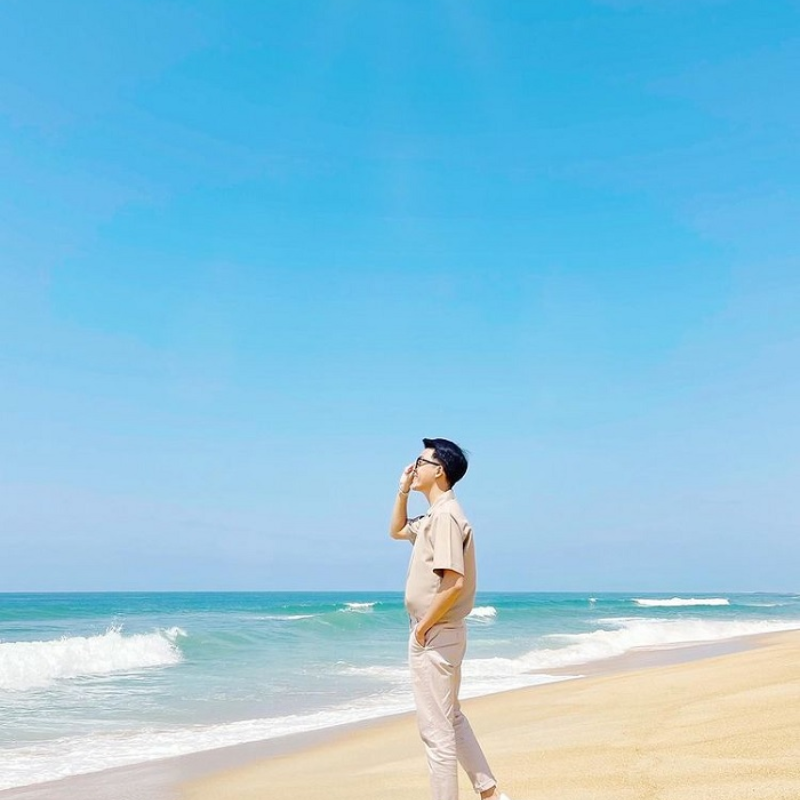
- Sa Huynh Beach: Located right near the salt field, Sa Huynh Beach is famous for its wild beauty and clear blue water. You can swim, relax, and enjoy fresh seafood here.
- Ganh Da Dia (Stone Plate Reef): A natural wonder with unique hexagonal basalt columns stacked on top of each other.
- My Khe Beach Tourist Area: Not far from Sa Huynh, My Khe is one of the most beautiful beaches in Central Vietnam.
- My Lai Massacre Historical Site: If you are interested in history, you can visit the Son My Memorial Site to learn about a tragic chapter in Vietnam's history.
The Local Trips Team suggests some attractive culinary options that you can find in the Sa Huynh area and nearby:
- Fresh seafood: With its coastal location, Sa Huynh is famous for its delicious fresh seafood. You can find many restaurants and beachfront eateries serving dishes like shrimp, crab, fish, squid, snails... prepared in various ways such as grilled, steamed, stir-fried. This is definitely an unforgettable culinary experience when visiting Sa Huynh.
- Sa Huynh fish cake noodle soup (Bun Cha Ca Sa Huynh): This is a characteristic dish of this region. The fish cake noodle soup in Sa Huynh has a unique flavor, the fish cake is made from fresh fish so it is very chewy and sweet. The broth is clear and sweet, served with fresh herbs.
- Sa Huynh herring salad (Goi Ca Trich Sa Huynh): Similar to Quang Ngai in general, herring salad is also a favorite dish in Sa Huynh. Fresh herring is skillfully prepared, mixed with aromatic herbs, roasted peanuts, and a distinctive sweet and sour fish sauce.
- Rustic dishes: You can also find small eateries serving simple rice dishes with local specialties such as braised fish, braised pork, boiled vegetables... This is an economical option and helps you experience the everyday culinary flavors of the people of Sa Huynh.
- Quang Ngai specialties: If you travel a bit further towards Quang Ngai city, you will have more choices with specialties such as braised Tra River goby with pepper, corn spring rolls (ram bap), Quang noodles (mi Quang)...
We recommend you ask local people or those working in the tourism sector for recommendations on delicious and reasonably priced restaurants. Rest assured that the rich cuisine of the Sa Huynh coastal region will not disappoint you. Wishing our guests enjoyable meals!
Local Trips .ORG Specializes in Providing Search Information, Tourist Attractions at Sa Huynh Salt Field

Localtrips.ORG is proud to be your reliable companion on every journey to explore Vietnam. We always strive to provide the most useful and updated information about tourist attractions, culture, and history, including Sa Huynh Salt Field.
With a team of experts knowledgeable about local tourism, we will help you gain the most comprehensive understanding of Sa Huynh Salt Field, from directions to Sa Huynh salt field, the address of Sa Huynh salt field, to visiting tips and fascinating nearby destinations.
If you need more information or want to plan a trip to Sa Huynh Salt Field, do not hesitate to contact us. Localtrips.ORG is always ready to assist you for a wonderful and memorable travel experience.
Sa Huynh Salt Field FAQ?

To help our customers with more detailed information, we have compiled some frequently asked questions about Sa Huynh Salt Field:
What is the area of Sa Huynh Salt Field?
Sa Huynh Salt Field has an area of approximately 120 hectares.
When is the best time to visit Sa Huynh Salt Field?
The ideal time is from March to August annually, especially in the early morning or late afternoon.
Where can I buy Sa Huynh salt?
You can buy it directly at the Sa Huynh salt production area or at the Sa Huynh salt market.
How does the Sa Huynh salt making process work?
The Sa Huynh salt making process includes many steps such as drying sand, channeling seawater into the fields, evaporating seawater under the sun to crystallize salt, and harvesting the salt.
What is special about the quality of Sa Huynh salt?
The quality of Sa Huynh salt is known for its high purity, large and white grains.
Conclusion
Sa Huynh Salt Field is not only a place that produces pure salt grains but also a cultural symbol, a proud traditional Vietnamese craft village. Let Localtrips.ORG discover and appreciate these unique cultural values on your Sa Huynh salt field tour. We believe that the simple beauty and interesting stories at Sa Huynh Salt Field will leave a lasting impression on you.


Related collection
Explore collections containing this product


