


Queen Beach, Old Binh Dinh, New Gia Lai: A Masterpiece of Egg-Shaped Rocks by the Ocean
Nestled at the foot of the majestic Xuan Van mountain, where silver-capped waves continuously caress giant "rock eggs," Queen Beach appears as a precious gem within the heritage of Central Vietnam. This is not just a pristine beach in Binh Dinh, but also a place that preserves the last imperial imprints of Vietnam. From the perspective of the Local Trips team, we see this destination becoming the focal point of a multi-experience tourism axis, connecting the coastal strip of old Binh Dinh with the promising new Gia Lai highlands. A journey from the blue sea to the green Tây Nguyên (Central Highlands) is unfolding, beginning right at the rocky reefs of Quy Nhon, the city of poetry.
Geographical Location of Queen Beach, Old Binh Dinh, New Gia Lai
To decipher the charm of this location, it is first necessary to accurately pinpoint its coordinates on Vietnam's tourism map. Queen Beach is situated within the Ghềnh Ráng – Tiên Sa Tourist Area complex, in Ghềnh Ráng ward, Quy Nhon city. Located just about 3 km south of Quy Nhon's administrative center, it is a rare destination that retains its tranquility despite being very close to the bustling city.
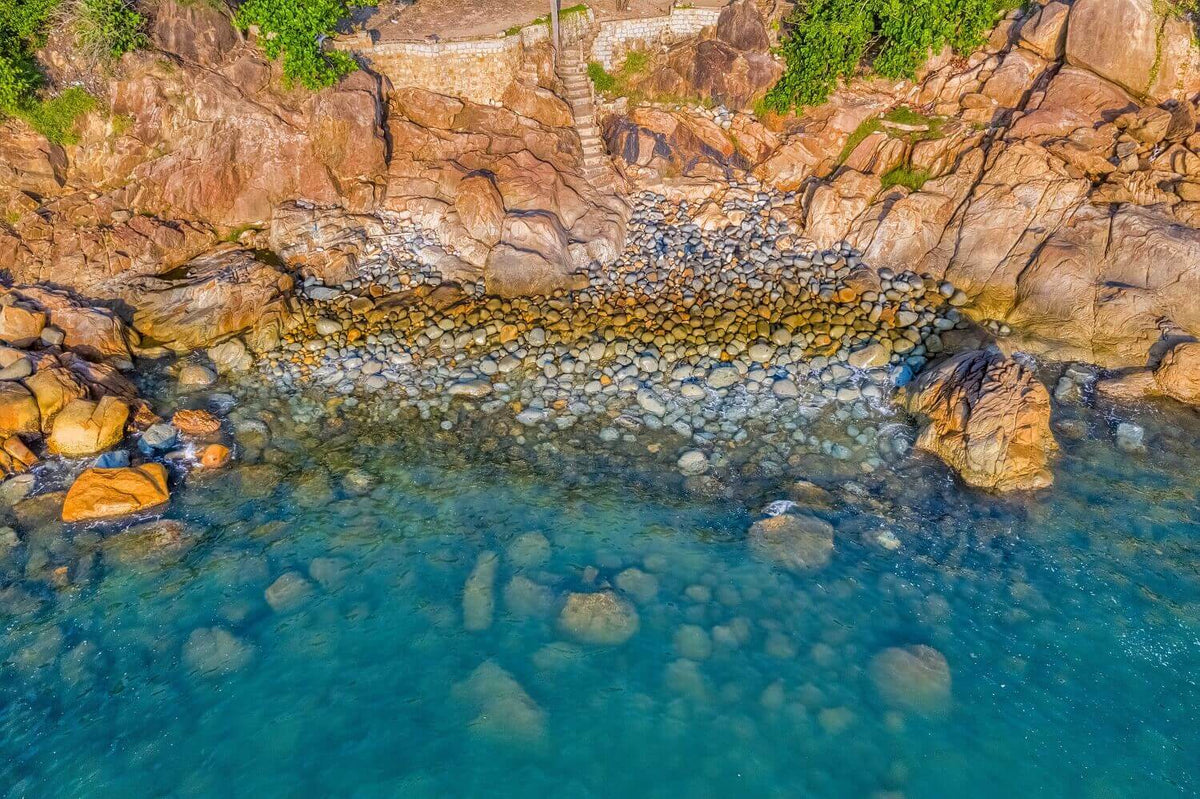
In terms of topography, the beach boasts a secluded area, nestled against the mountains and facing the vast East Sea. The most distinctive feature here is the unique round rock formations, creating a distinct "rock world." In the 2026 development vision, this location serves as the eastern gateway of the East-West corridor. Through National Highway 1D and National Highway 19, tourists can easily establish a perfect sea-to-highlands route. Traveling from the egg-shaped rock beach to the center of Pleiku in Gia Lai province has become more convenient than ever, connecting Binh Dinh – Central Highlands tourism into a closed experiential loop. From our experience, understanding the "mountain-backed, water-facing" terrain of the beach will help you gain more artistic perspectives when visiting.
Famous Tourist Attractions at Queen Beach, Old Binh Dinh, New Gia Lai
A common question from many travelers is: "What does Queen Beach offer?" In fact, it's a complex that combines both natural and historical-cultural elements, providing a true destination experience:
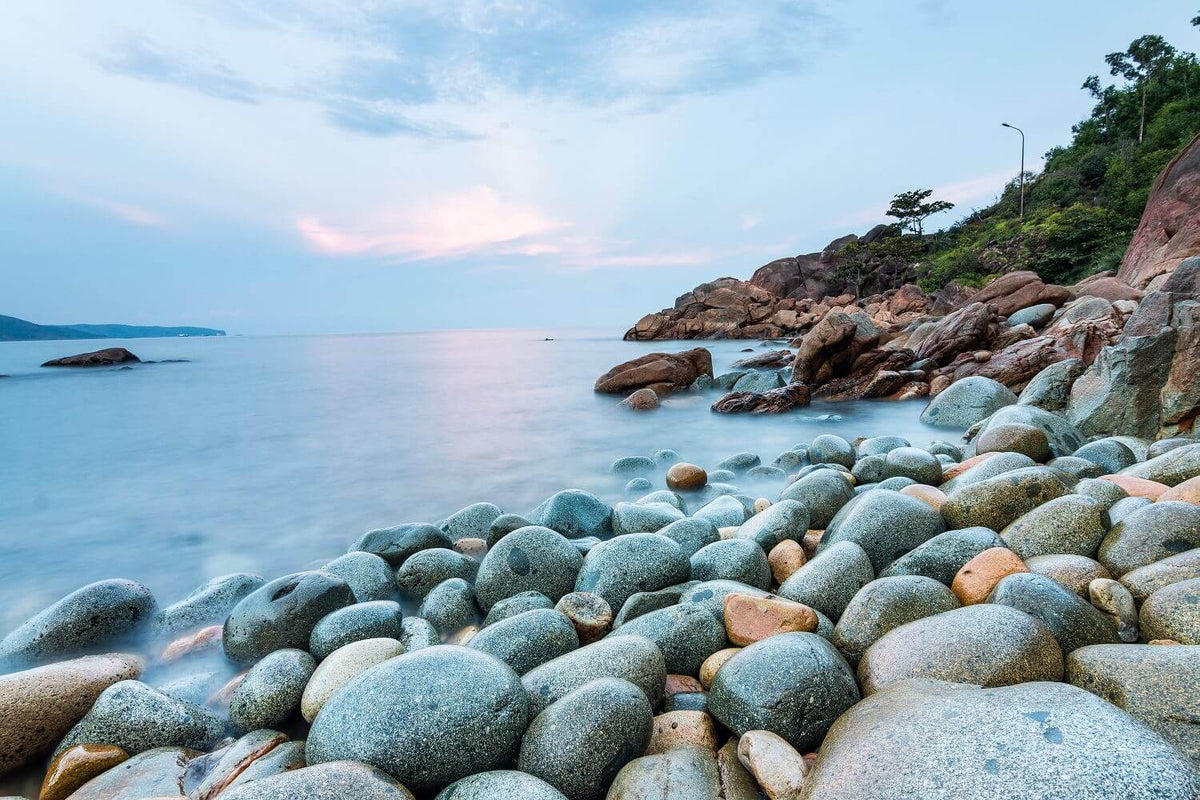
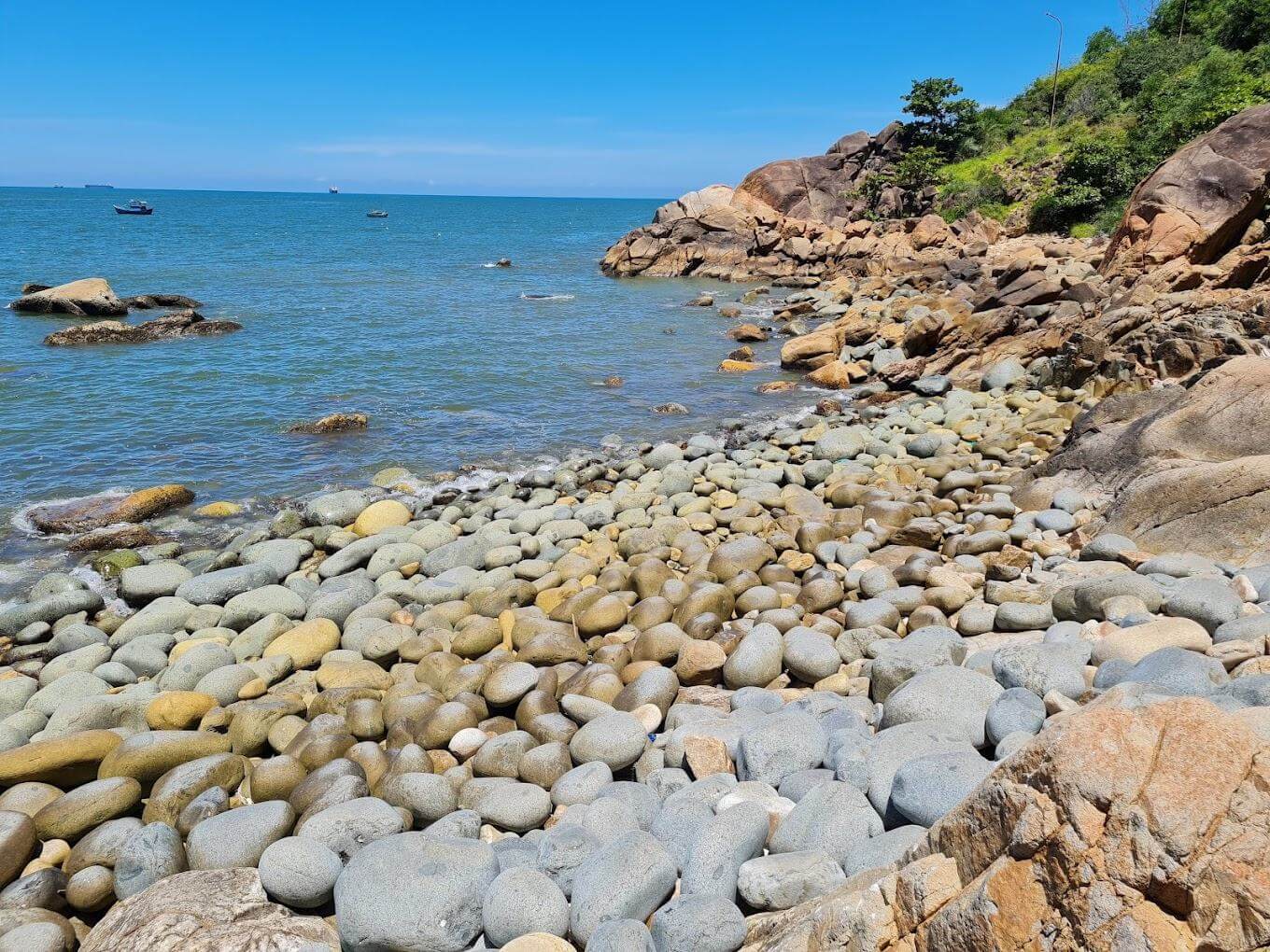
- Egg-shaped stones: This is a priceless "specialty" of Central Vietnam's nature. Thousands of round, smooth pebbles of all sizes are stacked on top of each other like giant eagle eggs. The feeling of walking on the cool stones, listening to the waves weaving through the cracks, is a truly unique natural beach experience.
- Thi Nhan Hill & Han Mac Tu's Tomb: Just a few steps from the rock formations, visitors can visit the resting place of the talented but ill-fated poet. This is a famous Quy Nhon tourist spot for those who love literature and want to find a peaceful space.
- Coastal cliffs – mountains: The system of rocky reefs here possesses a majestic beauty, the result of millions of years of marine erosion. The vertical cliffs create a spectacular landscape, perfect for those who want to check-in at Quy Nhon's egg-shaped rock beach from above.
- Tien Sa Beach: Located adjacent to Queen Beach, this area has finer white sand, suitable for strolling and admiring the panoramic view of Quy Nhon beach, curving like a crescent moon.
The combination of natural beauty and historical stories makes this a beautiful check-in beach in Central Vietnam that anyone visiting "Ghenh Rang" must experience at least once.
History of Queen Beach, Old Binh Dinh, New Gia Lai
The name of the beach is not accidental; it is linked to a part of Binh Dinh's tourism heritage and the imperial imprint of Vietnam. According to the legend of Queen Beach, during her trips with Emperor Bao Dai to inspect the central region, Empress Nam Phuong was captivated by the pristine and fascinating beauty of the egg-shaped rocks here.
She chose this beach as her private retreat. From then on, the name "Queen Beach" was born as a way to honor the elegant and noble beauty of the last empress. A practical lesson is that by understanding the cultural history of Quy Nhon, visitors will find that every rock, every wave here seems to recount the story of an era when Emperor Bao Dai's resort once existed. This is the factor that creates the core spiritual value, transforming a pristine beach into a vibrant cultural symbol in the heart of coastal South Central Binh Dinh.
Economy of Queen Beach, Old Binh Dinh, New Gia Lai
In the context of 2026, tourism at Queen Beach Quy Nhon is not merely about sightseeing but also a powerful driver of the regional economy. Localtrips.ORG has observed a clear shift in the local economic structure:
- Development of Coastal tourism: Substantial investment in the infrastructure of Ghenh Rang tourist area helps enhance the value of tourism real estate and create sustainable livelihoods for the residents of Ghenh Rang ward.
- Binh Dinh - Gia Lai integration in the value chain: The connection between the sea and the highlands diversifies tourism products. Tourists from new Gia Lai come to the coast for high-end resort services, while specialties from Xu Nau follow tourists up to the highlands.
- Coastal ecological tourism: The preservation of the coastal ecosystem and wave erosion stones is being prioritized to develop eco-tourism, attracting international visitors who appreciate the pristine nature of Central Vietnam.
Weather at Queen Beach, Old Binh Dinh, New Gia Lai
Weather is a key factor determining the quality of a Quy Nhon – Ghenh Rang – Queen Beach tour. The climate here is divided into two distinct seasons:
- Dry season (January to August): This is the golden time for tourism. The sky is clear blue, and the golden sun makes the sea sparkle with an emerald hue, highlighting the silvery gray of the egg-shaped rocks. This is also an ideal time to undertake the Quy Nhon – Gia Lai sea tourism route without worrying about typhoons in Central Vietnam.
- Rainy season (September to December): The sea is often rougher, with waves crashing against the rocky reefs, creating majestic white water columns. However, some steep, slippery areas will become dangerous, and visitors need to be cautious when moving around.
Regardless of the season, the romantic seascape of Quy Nhon always possesses its own charm. If you love vibrancy, choose summer; if you seek contemplative inspiration for your soul, early autumn days will be an excellent choice.
Means of Transportation to Queen Beach, Old Binh Dinh, New Gia Lai
With its extremely close proximity to the city center, accessing Queen Beach Quy Nhon is incredibly easy:
- Motorbike/Personal car: It takes only about 5-10 minutes to drive from Quy Nhon city center along An Duong Vuong street. You will see the entrance to Ghenh Rang Tourist Area immediately on your left.
- Electric tourist car: A very popular mode of transport in Quy Nhon, allowing you to leisurely admire the city streets before reaching the unique rock beach.
- Regional connection from Gia Lai: Tourists departing from Pleiku can travel along National Highway 19 down to Quy Nhon. The journey takes about 3-4 hours through majestic mountain passes, connecting two distinct geographical regions: the highlands and the coast.
Note that in the rock beach area, the terrain is primarily natural rock, so you should wear sports shoes or sandals with good grip for convenient sightseeing and photography.
Cuisine at Queen Beach, Old Binh Dinh, New Gia Lai
The trip would not be complete without the distinctive flavors of "Xu Nau." Around the Ghenh Rang area and the city center, you cannot miss:
- Fresh seafood: Crabs, lobsters, and sea snails caught daily, retaining the sweet and salty taste of the ocean.
- Banh xeo tom nhay (sizzling cake with jumping shrimp): A rustic dish that requires sophistication in preparation, it is the pride of Binh Dinh cuisine.
- Fusion of sea and highland cuisine: Thanks to the new Gia Lai connection, tourists in Quy Nhon can now easily enjoy highland specialties such as one-sun dried beef with ant salt right at coastal restaurants, creating a diverse culinary experience.
Accommodation Services at Queen Beach, Old Binh Dinh, New Gia Lai
The area around Queen Beach boasts a rich system of accommodation, meeting all needs from eco-tourism to luxury resorts:
- Coastal resorts: Resorts located along National Highway 1D with direct views of Egg Beach, offering private and luxurious spaces.
- Central hotels: Suitable for travelers who want convenient access to other Quy Nhon photo spots and explore night dining.
- Homestays in Quy Nhon: For those seeking intimacy, warmth, and an authentic experience of local culture.
Localtrips.ORG specializes in providing travel information about Queen Beach
We understand that a successful trip starts with accurate and in-depth information. At Localtrips.ORG, we don't just list destinations; we also provide insights into geological and natural features, helping you understand why these rocks have such peculiar shapes through concepts like wave erosion stones or coastal sedimentation processes.
Based on the experience of our expert team, we recommend that visitors combine their visit to the beach with an early morning trip to catch the first sunrise over the "rock eggs." This is when Queen Beach Vietnam appears in its most splendid and pristine form.
Frequently Asked Questions (FAQ)
1. Can you swim at Queen Beach?
In reality, this beach has a unique, rocky, and quite steep terrain, making it slippery and less suitable for swimming. It is mainly for sightseeing, admiring the scenery, and taking photos. If you wish to swim, you can move to the adjacent Tien Sa beach.
2. Why is it called Egg-shaped Rock Beach?
This name comes from the shape of thousands of pebbles here. Through long-term marine erosion, the rock masses are smoothed and rounded, looking exactly like giant bird eggs.
3. Is there an entrance fee for Queen Beach?
Currently, visitors only need to pay for parking and the entrance fee to Ghenh Rang Tourist Area (a very small fee, usually ranging from 10,000 - 20,000 VND) to freely explore the beach and Han Mac Tu's tomb.
4. How long does it take to get to Queen Beach from Gia Lai?
If traveling by car along National Highway 19, it will take approximately 3 to 4 hours to travel from Pleiku city to the beach in Quy Nhon.
5. What is the best time to take photos at Egg Beach?
Sunrise (from 5:30 AM - 7:00 AM) and sunset (from 4:30 PM - 5:30 PM) are the two "golden hours." The sunlight streaming through the cliffs creates incredibly impressive contrasting colors on the surface of the egg-shaped rocks.
6. Are Queen Beach and Bãi tắm Hoàng Hậu the same?
Yes, Queen Beach Quy Nhon is the English name commonly used by international tourists and travel sites when referring to this destination, honoring the historical imprint of Empress Nam Phuong.
Conclusion:
Queen Beach is not merely a beach, but a symbol of the harmony between nature and history. Amidst the modern life of old Binh Dinh and the forward-looking vision of new Gia Lai, the egg-shaped rock beach quietly lies there, telling the story of a bygone dynasty and a sustainable tourism future that is coming. Let your soul settle amidst the rocky reefs, let the sound of Quy Nhon's waves wash away worries and recharge your energy for future journeys.
Final advice: When visiting, remember to keep it clean and do not take any egg-shaped rocks from the beach area to preserve the pristine nature of Central Vietnam for future generations.
Read more articles about travel at Localtrips.ORG, contact us for in-depth tour consultation, or leave a comment sharing your feelings about the beauty of the egg-shaped rock beach!


Related collection
Explore collections containing this product


