



Quan The Am Pagoda: A "Spiritual Sanctuary" at the Foot of Kim Son Mountain – A Journey to Find Your Roots in Hoa Hai Ward
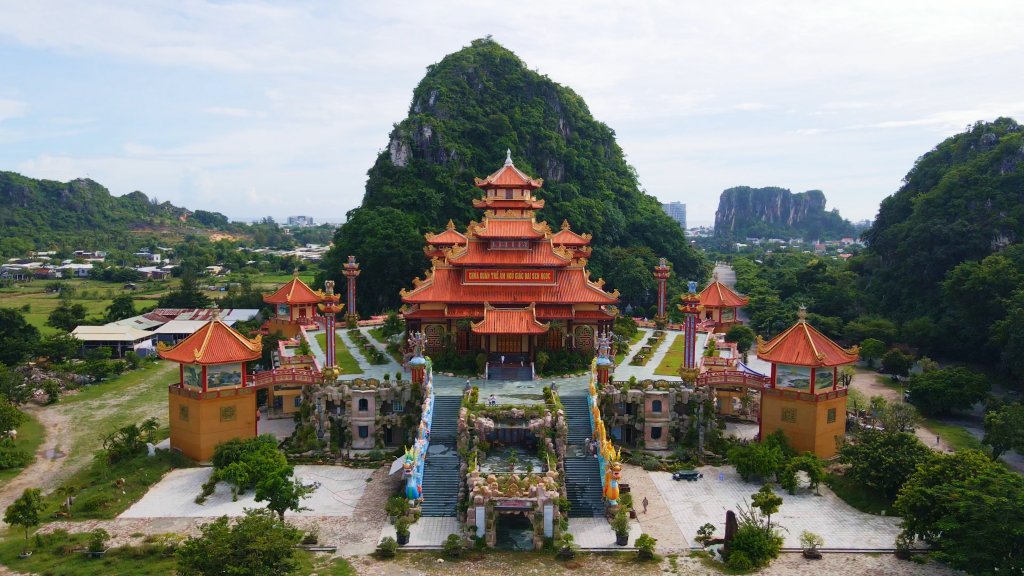
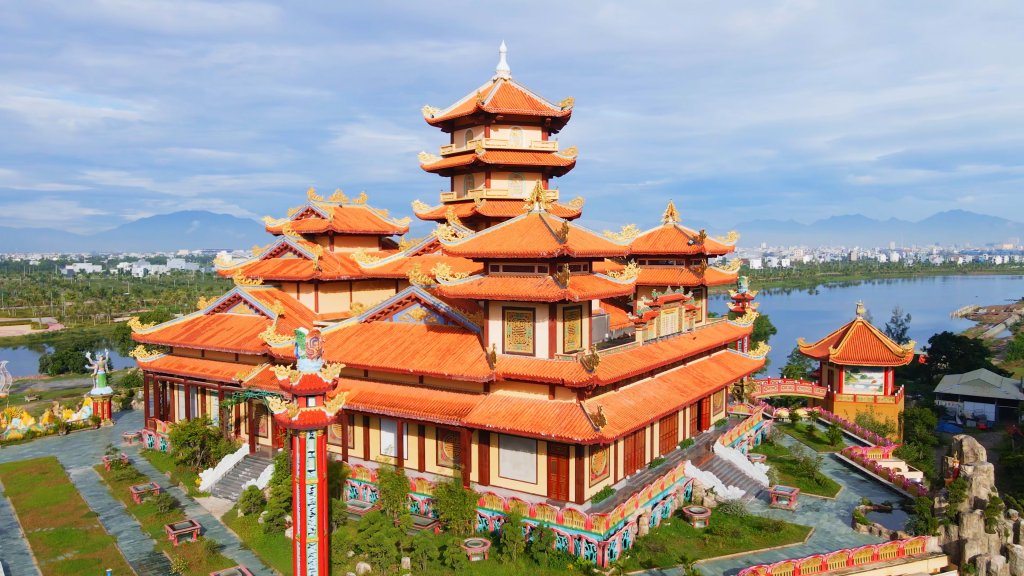
Nestled at the foot of Kim Son mountain, part of the legendary Marble Mountains (Ngu Hanh Son) scenic cluster, Quan The Am Pagoda (also known as Quan Am Pagoda) is one of the largest Buddhist cultural centers in Central Vietnam. Under the new administrative structure of the Da Nang metropolitan area, the pagoda is located in Hoa Hai Ward, Da Nang City. With its serene, solemn atmosphere and mystical cave system, this place offers absolute relaxation and is a sacred destination for a journey to find one's spiritual essence.
"Mountain-Backed, Water-Facing" Location and Historical Formation
Quan The Am Pagoda boasts a beautiful feng shui position, leaning against Kim Son mountain and overlooking the poetic Co Co River in Hoa Hai ward.
- Exact address: 48 Su Van Hanh, Hoa Hai Ward, Da Nang City.
- History: Founded in 1957 by the Venerable Thich Phap Nhan. The pagoda is associated with the legend of the manifestation of Bodhisattva Quan The Am in a cave here.
- Special features: This is the venue for the Quan The Am Ngu Hanh Son Festival – one of the 15 largest festivals nationwide, recognized as a national intangible cultural heritage.
"Stunning" Architectural Structures at the Pagoda
From Localtrips.ORG's perspective, these are the highlights that contribute to the value of the ancient pagoda:
1. Mystical Quan Am Cave
Deep within Kim Son mountain lies Quan Am Cave with natural stalactites and stalagmites shaped like Buddhas and Bodhisattvas. The cave's interior is cool and mysterious, evoking a sense of wonder at the delicate beauty of nature and the human touch in its embellishment.
2. Museum of Buddhist Culture
Quan The Am Pagoda proudly houses the first museum of Buddhist culture in Vietnam. It preserves hundreds of rare artifacts dating back many centuries, serving as a treasure trove of wisdom and art in the journey to rediscover the essence of the Dharma.
3. Marble Statue of Bodhisattva Quan The Am
The majestic and benevolent statue of Bodhisattva standing in the pagoda grounds is where Buddhists and pilgrims often come to worship and pray for peace. Her compassionate gaze brings absolute relaxation to the soul of every individual.
Visitor Information & 2026 Festival
Localtrips.ORG provides practical information to help you have a complete pilgrimage:
|
Category |
Details |
Reference Information |
|
Admission Fee |
Pagoda & Cave visit |
Free |
|
Opening Hours |
Welcoming visitors |
07:00 – 18:00 daily |
|
Main Festival |
Quan The Am Ngu Hanh Son Festival |
19th day of the 2nd lunar month |
|
Attire |
Spiritual visit regulations |
Polite, modest |
|
Tour Guide |
Ngu Hanh Son pilgrimage tour |
800,000 - 1,200,000 VND/day |
Popular Nearby Attractions
From Hoa Hai Ward, you can easily visit other cultural sites:
- Thuy Son Mountain (500m away): The largest mountain with Linh Ung Pagoda and Huyen Khong Cave.
- Non Nuoc Stone Carving Village (1km away): Explore traditional stone carving art.
- Non Nuoc Beach (800m away): One of Da Nang city's most beautiful beaches.
- Hoi An Ancient Town (15km away): A charming old town illuminated by lanterns.
Localtrips.ORG – Your Expert Consultant for Spiritual Journeys in Da Nang
The team at Localtrips.ORG considers Quan The Am Pagoda a "spiritual anchor" amidst urban life. A practical tip from experts: If you visit during the festival (2nd lunar month), be prepared for a large crowd. Come early in the morning to enjoy the peaceful sunrise check-in by the Co Co River before the main festivities begin.
Localtrips.ORG specializes in providing accurate travel information for the expanded wards and communes of Da Nang city. We help you connect with Tour Guides knowledgeable in Buddhist philosophy and the history of the Marble Mountains, making your trip more profound and meaningful.
Frequently Asked Questions (FAQ)
1. What administrative unit does Quan The Am Pagoda belong to now?
According to the new administrative structure of 2026, the pagoda is located in Hoa Hai Ward, Da Nang City. There are no longer district levels as before.
2. What is the best season to visit the pagoda?
The first and second lunar months are when the pagoda is most beautiful and bustling with traditional ceremonies. However, if you prefer tranquility, the dry months (March to August) are ideal.
3. Is the pagoda safe for children?
The pagoda grounds are spacious and airy, very safe for children. Parents should pay attention to children when visiting the caves as the paths can be a bit slippery.
4. Are there food services at the pagoda?
During major festivals, the pagoda often serves free vegetarian meals for Buddhists. On regular days, you can find vegetarian restaurants and local specialties in the surrounding Hoa Hai ward area.
5. Can one see Red-shanked Doucs here?
No, this species primarily lives on Son Tra Peninsula. At the Marble Mountains, you will mainly see the biodiversity of plant species on the limestone mountains.
Conclusion: Quan The Am Pagoda is a place to leave worries behind and find peace in every soul. Come and listen to the echoing pagoda bells and feel the sacred beauty of Da Nang!
Contact Localtrips.ORG now for the most detailed itinerary consultation for visiting the Marble Mountains!


Related collection
Explore collections containing this product


