


Hue Museum of Royal Antiquities: Where Golden Eras Are Preserved
Located right next to the majestic Forbidden City, the Hue Museum of Royal Antiquities is not only a place to display priceless treasures but the museum building itself is a masterpiece of architecture. Established in 1923, initially named Musée Khải Định, it is one of Vietnam's oldest museums. The LocalTrips.ORG team will join you in stepping through the door of time to admire exquisite artifacts, evidence of the prosperity and artistic talent of a bygone dynasty.
Geographical Location of the Museum of Royal Antiquities – The Heart of Hue Citadel
Located at 03 Le Truc Street, Dong Ba Ward, Hue City, Thua Thien Hue Province, the museum is in an extremely convenient location for tourists. Just a few steps from Hien Nhon Gate of the Imperial Citadel, the museum is surrounded by ancient trees and the peaceful atmosphere of the citadel's historical area.
This location makes it easy for visitors to combine a museum visit immediately after exploring the Imperial City. With the distinctive architecture of the Thua Thien Hue region, the museum serves as a perfect link between history and the present, helping viewers fully envision the daily life of the ancient royal family.
List of Administrative Units under Dong Ba Ward with Nearby Tourist Attractions
Dong Ba Ward, located in the heart of Hue Citadel, is where bustling trade life and long-standing historical values converge. After merging from former administrative units (Phu Hoa and Thuan Thanh wards), Dong Ba has become the "heart" of the city's tourism with an extremely convenient network.
Organizational structure and residential areas
Dong Ba Ward is currently divided into residential groups (TDPs) to manage residents and develop socio-economics. Due to its unique location within the heritage site, the residential areas here are closely linked to the ancient streets and the citadel system:
- Commercial center area (Around Dong Ba Market): Includes residential groups along Tran Hung Dao and Phan Dang Luu streets, where the most bustling trade activities take place.
- Old quarter and Dong Ba River area: Includes residential groups along Huynh Thuc Khang and Dao Duy Anh streets, preserving the ancient house architecture and traditional lifestyle of Hue people.
- Area bordering the Imperial City: Residential clusters located near Dong Ba Gate and Thuong Tu Gate, directly connected to the Imperial Citadel complex.
Administrative information to know
To conduct civil transactions or seek support when staying in the area, you can contact the following:
- Dong Ba Ward People's Committee Headquarters: Located at 51 Huynh Thuc Khang, Dong Ba Ward (former Kim Long Ward area after boundary adjustment). This is where administrative procedures are handled and urban order is managed in the area.
- Dong Ba Ward Police: The unit responsible for security, order, and managing temporary residence for tourists and residents.
Tourist attractions "a few steps away" from Dong Ba Ward
With its prime location, Dong Ba Ward is an ideal starting point for you to explore famous landmarks without having to travel too far:
- Dong Ba Market: A commercial symbol over 100 years old, where you can find all Hue specialties and experience a diverse street food culture.
- Truong Tien Bridge: Only about 200m from the market, the six-arched bridge reflecting on the Perfume River is an unmissable check-in spot, especially when lit up at night.
- Hue Imperial City (Citadel): About 1km from the ward's central area (10-15 minutes walk). You can enter through Thuong Tu Gate to visit Ngo Mon Gate, Thai Hoa Palace, and the system of Nguyen Dynasty palaces.
- Hue Museum of Royal Antiquities: Located on Le Truc Street, very close to the western boundary of the ward, where thousands of rare artifacts of ancient kings are preserved.
- System of parks along the Perfume River: Parks like Thuong Bac and Phu Van Lau are right next to the ward, ideal green spaces for strolling and watching dragon boats go up and down the river.
The combination of well-integrated administrative units and proximity to world heritage sites ensures that Dong Ba Ward is always a top choice for tourists who want to experience a Hue that is both ancient and dynamic.
Featured Attraction at the Museum – The Essence of Long An Palace
The biggest highlight of the museum is its main palace, Long An Palace:
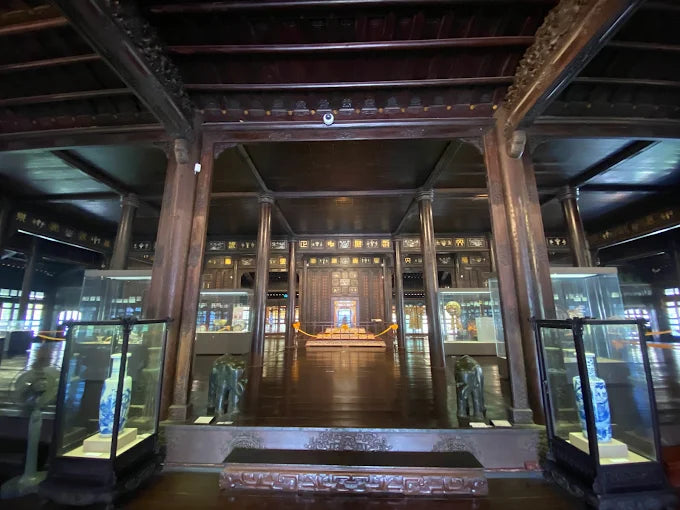
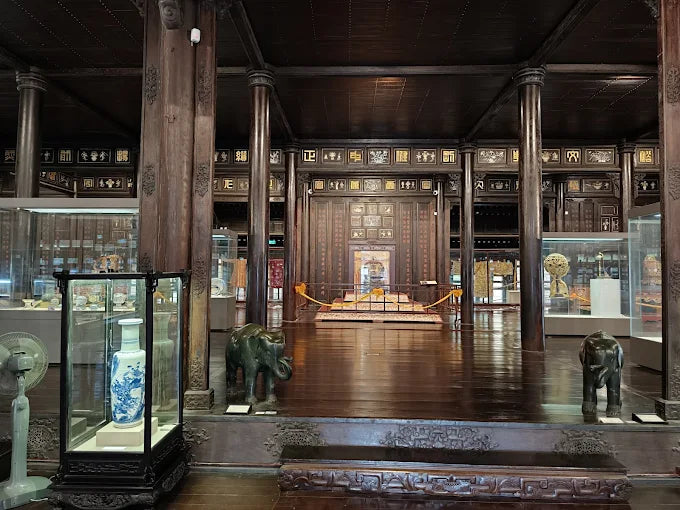
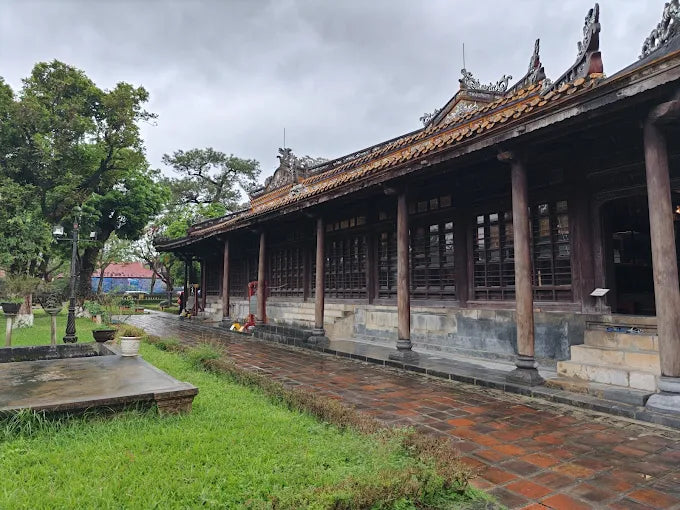
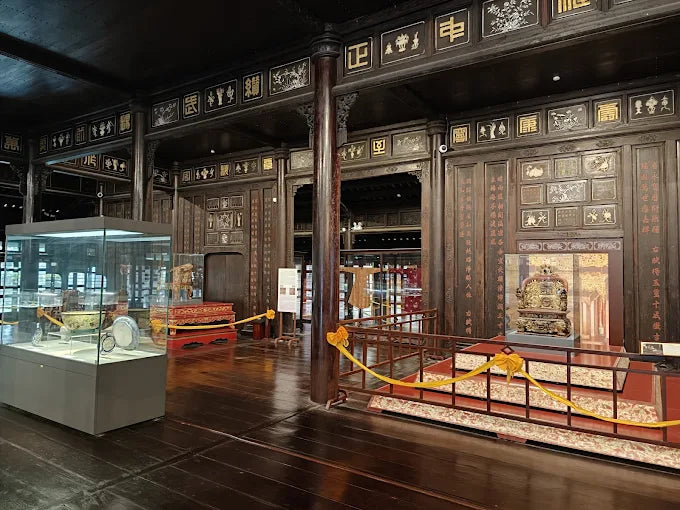
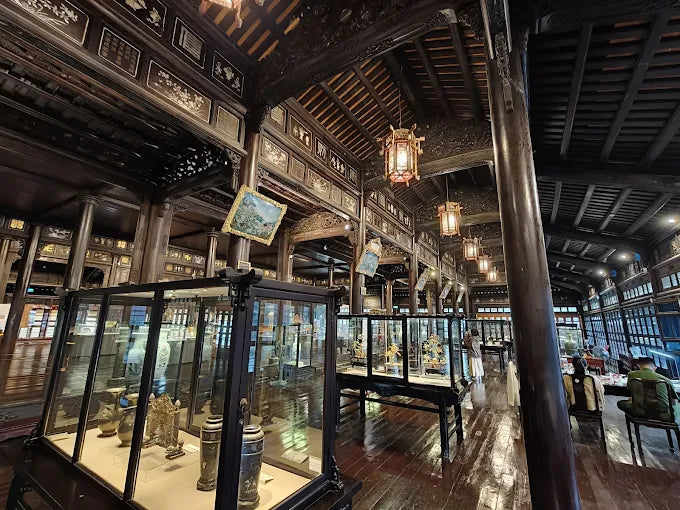
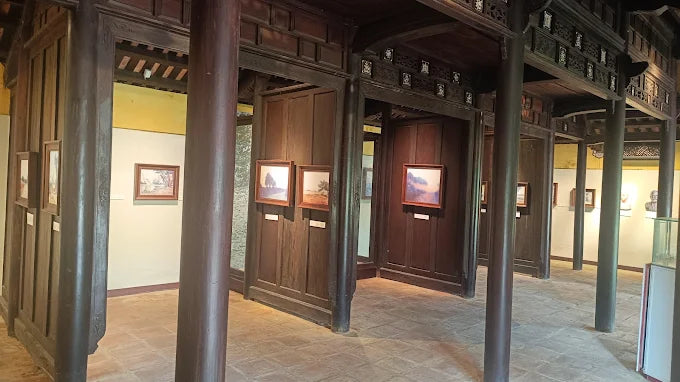
- Long An Palace Architecture: Built in 1845 during the reign of King Thieu Tri, this palace boasts an incredibly magnificent "trùng thiềm điệp ốc" architectural style (double-tiered roof, overlapping houses). The entire system of columns and rafters, made of precious wood, is intricately carved with poems and texts on the architecture.
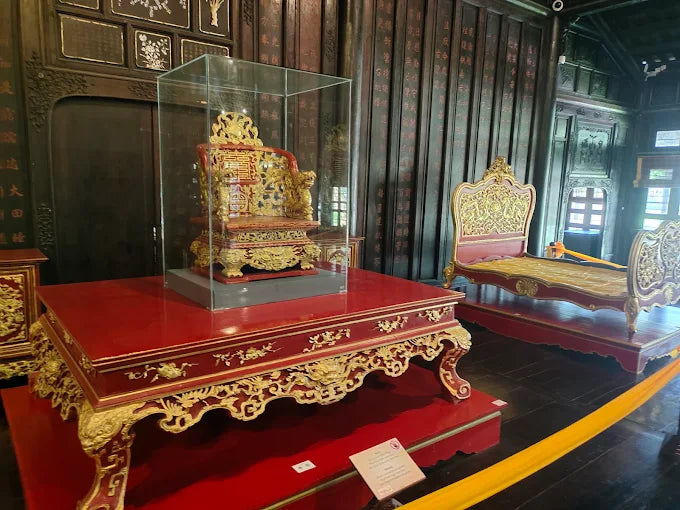
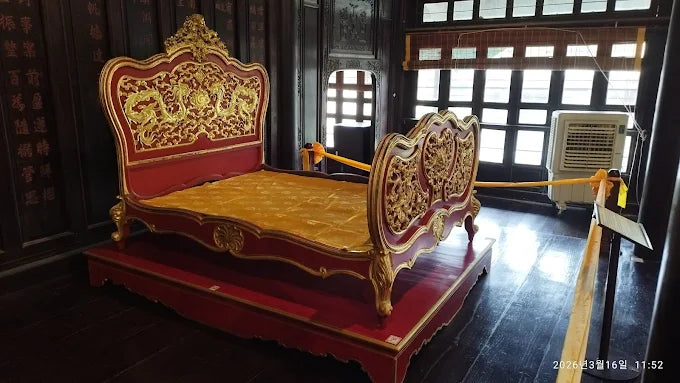
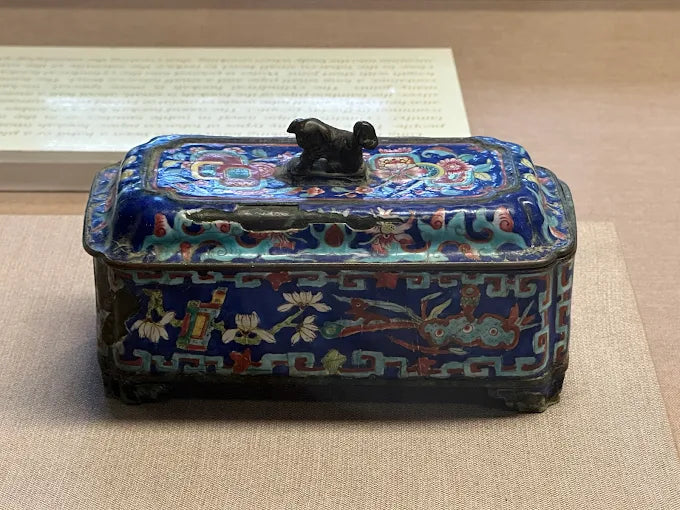
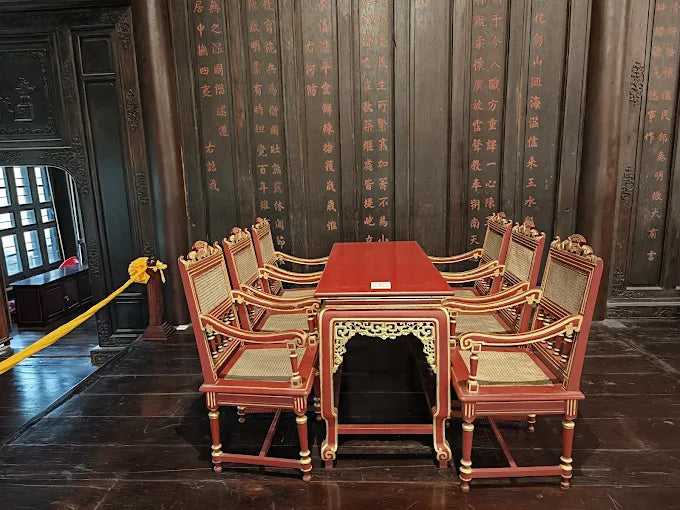
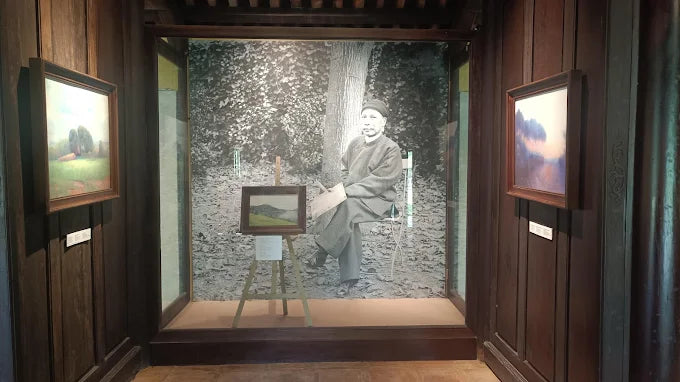
- Royal Collection: Displays costumes of kings and queens, beds, tables, chairs, and everyday items made of gold, jade, ceramics, etc., crafted by master Vietnamese artisans.
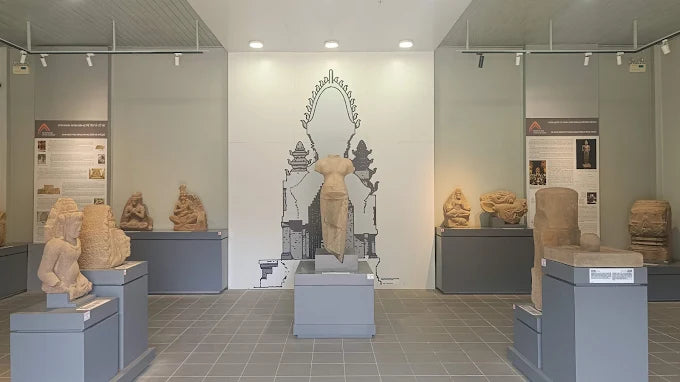
- Champa Antiquities: A separate exhibition area featuring unique stone statues found in the Central region, demonstrating a vibrant cultural exchange.
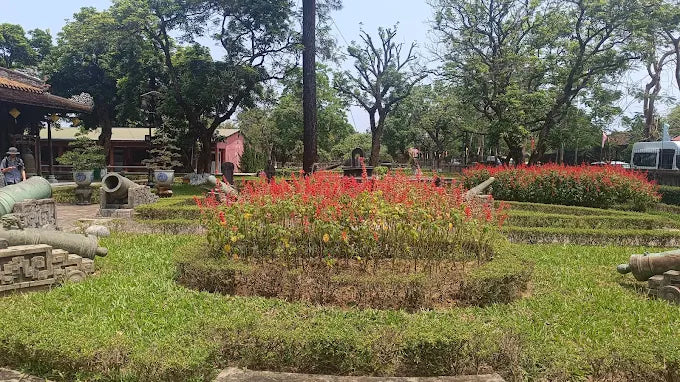
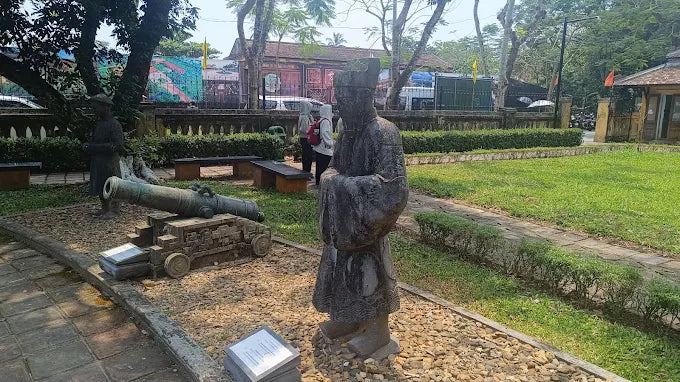
- Statue Garden and Cannons: The outdoor courtyard displays ancient cannons and ancient stone sculptures.
[Image: Panorama of Long An Palace with intricate wooden architecture - Alt text: Architecture of Long An Palace at Hue Museum of Royal Antiquities]
History of the Museum – From Royal Residence to National Museum
Long An Palace was originally a resting and reading place for King Thieu Tri before becoming a museum in 1923. During the French colonial period and years of war, many artifacts were lost, but through the efforts of local authorities, thousands of valuable antiquities have been collected and preserved. The museum's history is intertwined with efforts to preserve the nation's cultural identity after the end of the Nguyen Dynasty (1802 – 1945).
Economy & Tourism – Preserving Heritage Value
The Hue Museum of Royal Antiquities is a crucial link in the sustainable tourism economy of the ancient capital. The digitization of artifacts and the organization of thematic exhibitions have attracted numerous international tourists and researchers, generating important revenue for reinvesting in the preservation of artifacts. This is an indispensable destination for in-depth cultural tours in Hue.
Museum Ticket Prices (Updated 2026)
According to the latest policy, visitors who purchase tickets to the Imperial Citadel will receive free or heavily discounted admission to the museum:
|
Ticket Type |
Service Details |
Ticket Price (VNĐ) |
|
Adult Single Ticket |
Museum visit only |
50,000 / person |
|
Child Single Ticket |
Children aged 7-12 |
Free |
|
Visitors with Imperial Citadel tickets |
Included in combo |
Free |
|
Audio Guide Rental |
Multi-language automatic narration |
50,000 / rental |
|
Professional Photography |
Fee for film/photography crew |
According to specific regulations |
Weather & Ideal Time to Visit
Since most artifacts are displayed indoors (Long An Palace), you can visit the museum at any time of year. However, the period from January to April is when Hue's weather is most pleasant, perfect for strolling through the garden grounds. You should visit around 9 AM or 3 PM for the sunlight to shine through the wooden windows, creating a beautiful visual effect on the wooden artifacts.
Transportation to the Museum
- Walking: If you are in the Imperial Citadel area, it's just about a 5-minute walk.
- Bicycle: An elegant means of transport to cycle along the tree-lined streets of the citadel.
- Cyclo: A unique Hue experience sitting on a cyclo, passing through ancient city gates to reach the museum.
Nearby Food & Accommodation
The area around the museum is a paradise for Hue street food. Try "chè hẻm" (alley sweet soup), "bánh khoái" (savory pancake), or "bún bò" (beef noodle soup) at the nearby Dong Ba Market. For accommodation, French-style hotels or homestays within the citadel will offer an experience of living amidst history.
[Internal link suggestion to article: 'A 1-day journey to fully explore Hue Citadel']
Localtrips.ORG specializes in providing travel information about the Museum of Royal Antiquities
From a professional perspective, LocalTrips.ORG advises you not to film or take photos with flash inside Long An Palace to protect the colors of the artifacts. A practical lesson is to take the time to read the artifact information cards; you will find that behind each ceramic cup or royal robe lies a fascinating historical story. We are committed to providing prompt information about opening hours, thematic exhibitions, and the best hotel services to make your museum visit profound and memorable.
FAQ
1. Is photography allowed in the museum?
You are allowed to take photos in the garden area and outside Long An Palace. Inside the palace, photography is usually restricted or flash photography is prohibited to preserve wooden and silk artifacts.
2. Where can I buy combo tickets?
Combo tickets for visiting historical sites (Imperial Citadel - Museum - Tombs) are available at the entrance of all main historical sites or can be purchased online on the website of the Hue Monuments Conservation Center.
3. Does the museum have a luggage storage area?
There is a luggage storage area for bags and personal belongings right at the entrance for visitors to explore comfortably.
4. How long does it take to visit the entire museum?
If you are a history enthusiast, you should set aside 1 to 1.5 hours to thoroughly view the precious artifact collections.
5. What are the best check-in spots here?
The wooden wall with mother-of-pearl inlaid poems inside Long An Palace and the ancient cannons in the front courtyard are the most impressive photo opportunities.
Conclusion
The Hue Museum of Royal Antiquities is a convergence of nobility and national pride. It is not just a stop to gaze at the past but also a place to appreciate the ingenuity of our ancestors.
Valuable advice: Try renting an audio guide; you will better understand the meaning of the dragon and phoenix patterns on the king's imperial robe – something that is hard to fully decipher with the naked eye.
Ready to discover the royal treasures?
- [Contact us for specialized Hue tour itinerary consultation]
- [See more rare artifacts of the Nguyen Dynasty at LocalTrips.ORG]
- Which artifact in the museum impressed you the most? Let us know in the comments below!


Related collection
Explore collections containing this product


