




Hue Pedestrian Streets: A Vibrant and Poetic Rhythm of Life Along the Perfume River
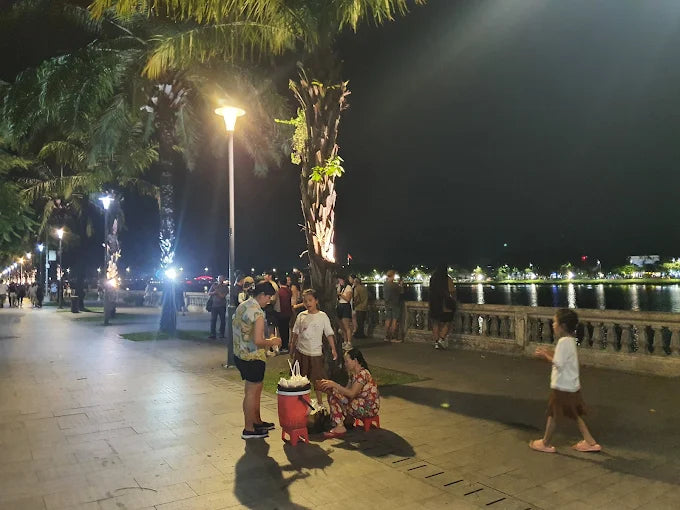
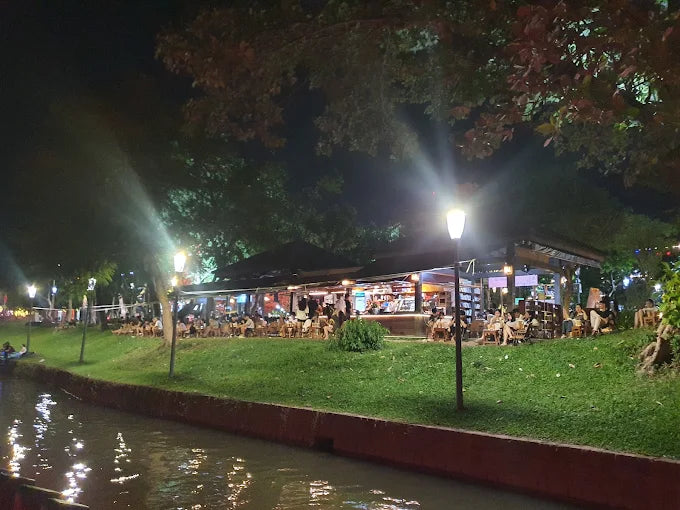
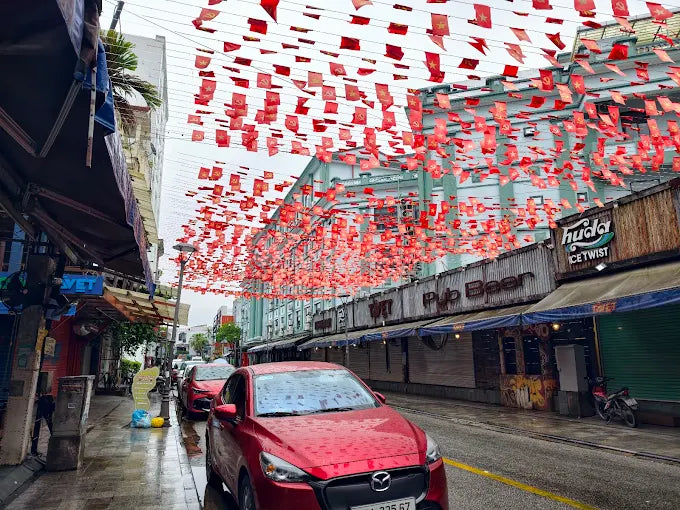
While Hue presents the serene beauty of tombs and pagodas by day, its pedestrian streets transform into a youthful and bustling spectacle as night falls. From the dazzling lights of the "Western Quarter" to the romantic, peaceful charm of the wooden bridges along the Perfume River, the pedestrian network here is where traditional culture and modern life intertwine. LocalTrips.ORG will join you for a stroll to experience the ancient capital's nightlife.
Famous Pedestrian Streets – Destinations of Emotion
Hue offers two distinctly different pedestrian street styles for you to choose from:
1. "Western Quarter" Pedestrian Street (Chu Van An - Vo Thi Sau - Pham Ngu Lao)
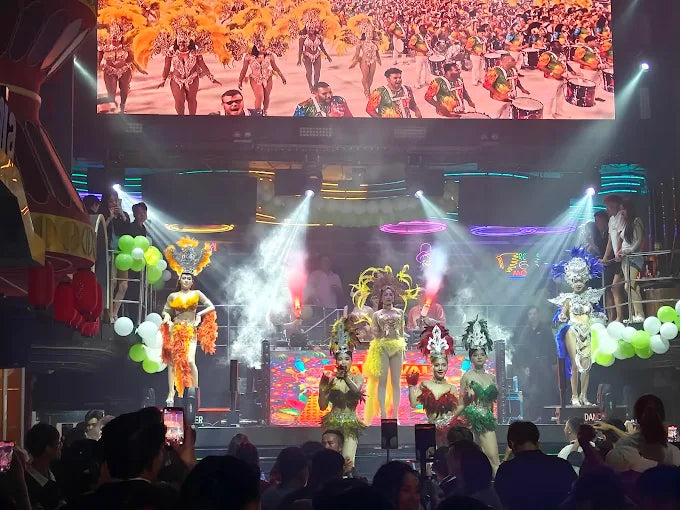
Located right in the heart of the Southern bank, this is the "holy land" of vibrancy. With a plethora of bars, pubs, and restaurants offering diverse cuisine from European dishes to Thua Thien Hue's distinctive street food, the Western Quarter attracts a large number of international tourists and young people. The music intertwined with laughter creates a festive atmosphere, especially on weekends.
2. Nguyen Dinh Chieu Pedestrian Street & Lim Wood Bridge
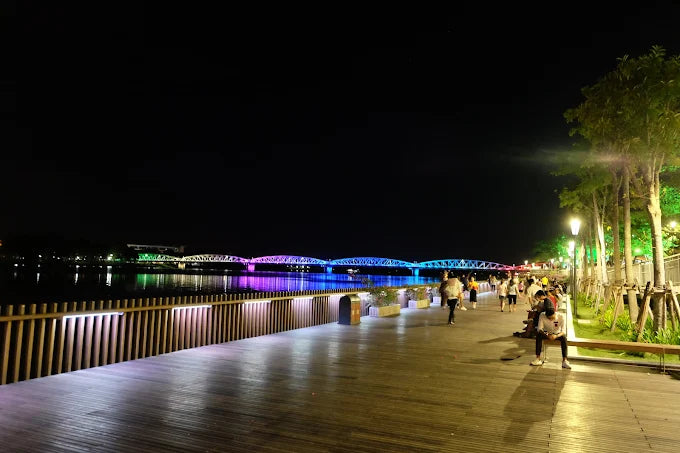
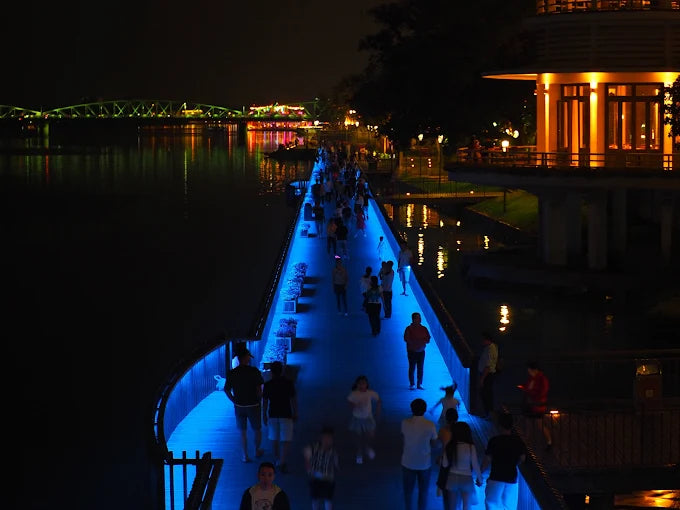
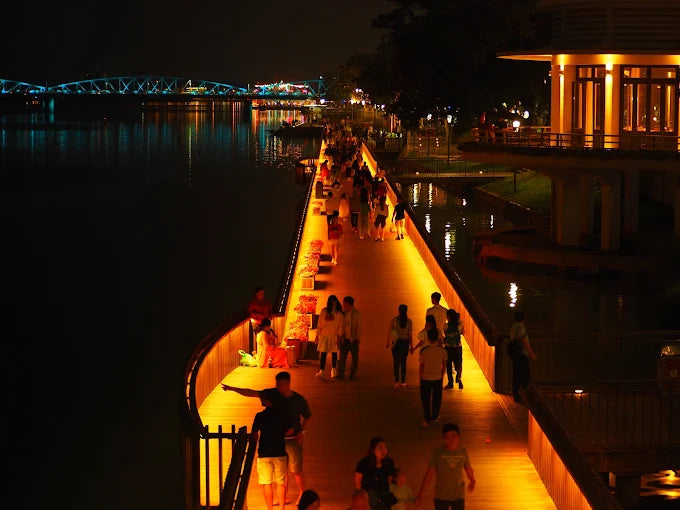
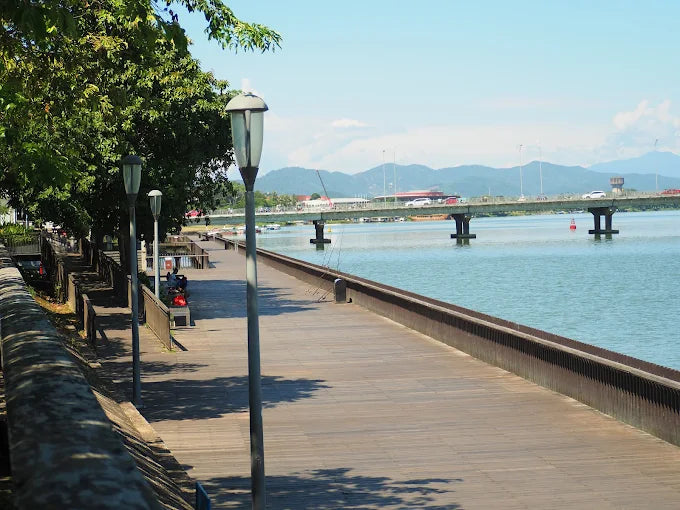
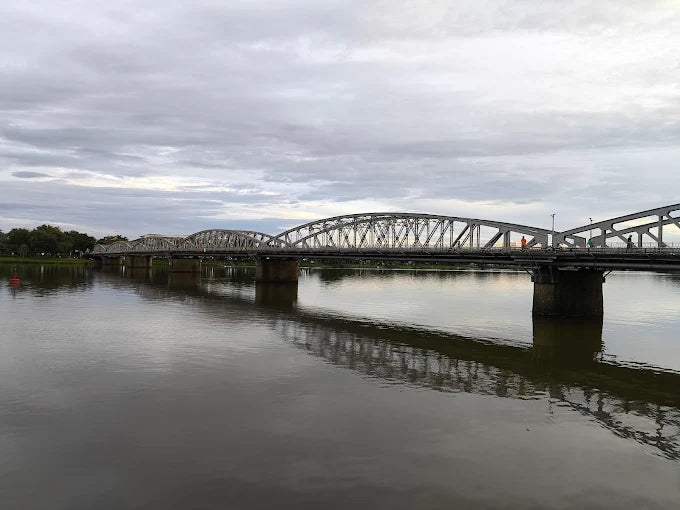
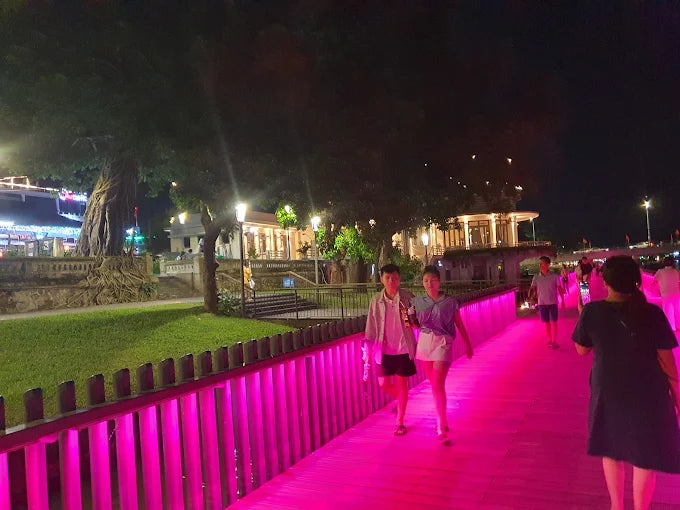
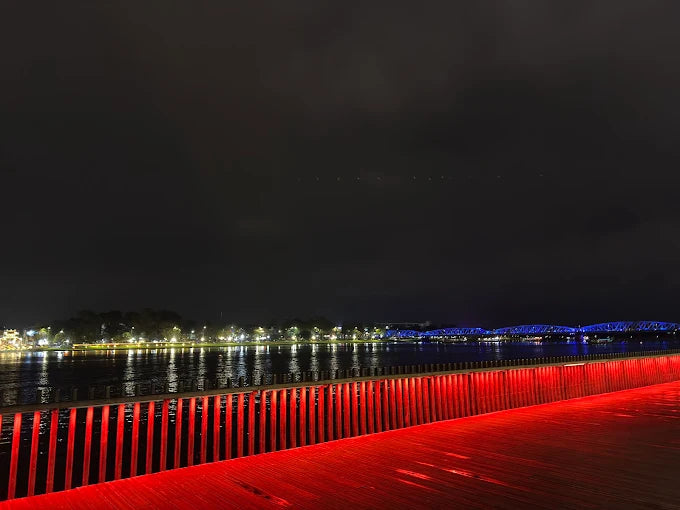
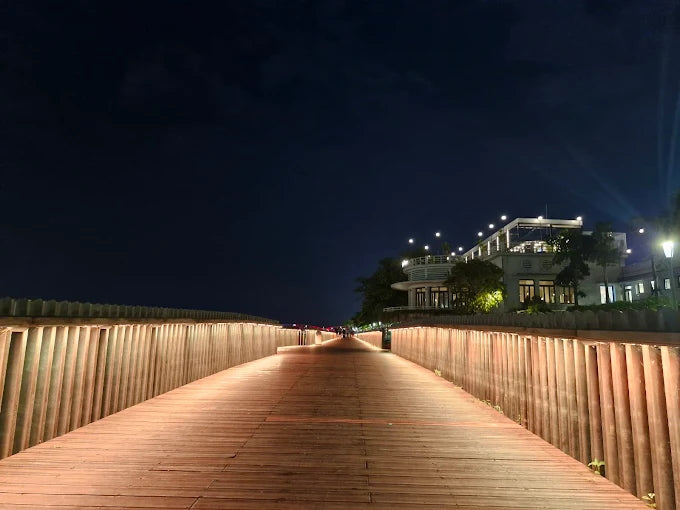
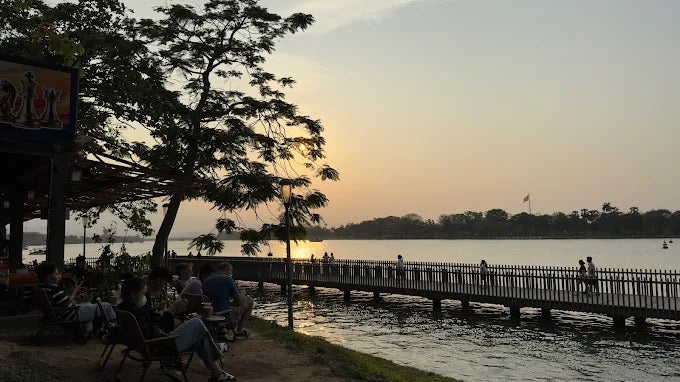
Running along the southern bank of the Perfume River, this street boasts an absolutely elegant and romantic beauty. The highlight is the precious lim wood pedestrian bridge, where you can stand in the middle of the river and admire the colorful Truong Tien Bridge. This is an ideal space for a stroll, breathing in the scent of alluvial soil, and watching dragon boats glide gracefully across the water.
3. Imperial City Pedestrian Street (North of the Perfume River)
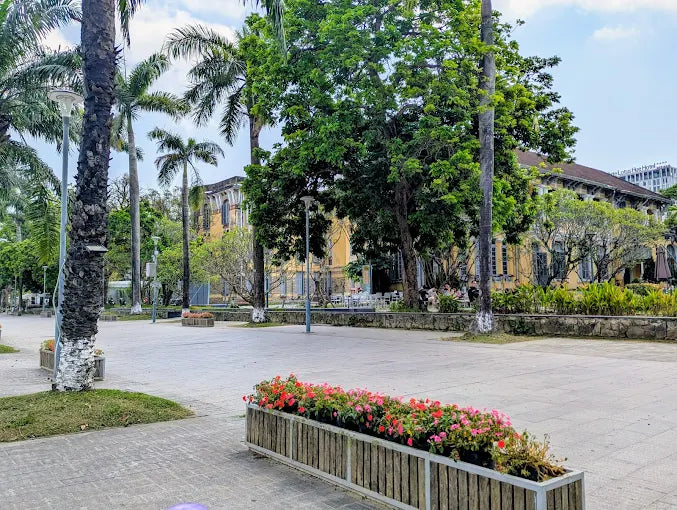
Surrounding the Imperial City complex, this street offers a nostalgic feel with ancient moss-covered walls and warm yellow lights. It regularly hosts folk cultural activities, traditional games, and is a space to honor the art forms of the Nguyen Dynasty (1802 – 1945).
[Image: Sparkling lim wood bridge with lights along the Perfume River - Alt text: Lim wood pedestrian street along Hue's Perfume River]
Geographical Location – The "Heart" Connecting Both Banks
Hue City currently boasts a diverse network of pedestrian streets, primarily concentrated along both banks of the Perfume River and in the bustling service areas on the South bank. Below is the detailed geographical location of the main pedestrian streets:
1. Nguyen Dinh Chieu Pedestrian Street (South Bank of the Perfume River)
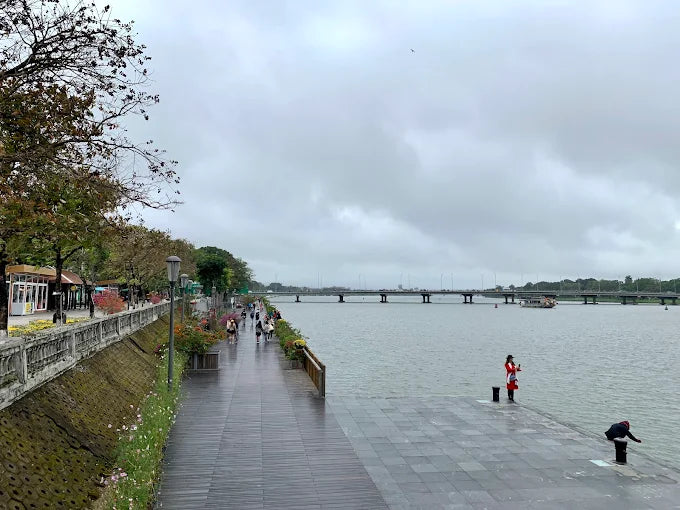
This is Hue's first and most famous pedestrian street, located right in the city center.
- Location: Runs along the South bank of the Perfume River, connecting from the foot of Truong Tien Bridge to Toa Kham Wharf.
- Administrative Boundaries: Belongs to Vo Thi Sau Ward (formerly Phu Hoi and Thuan Hoa Wards).
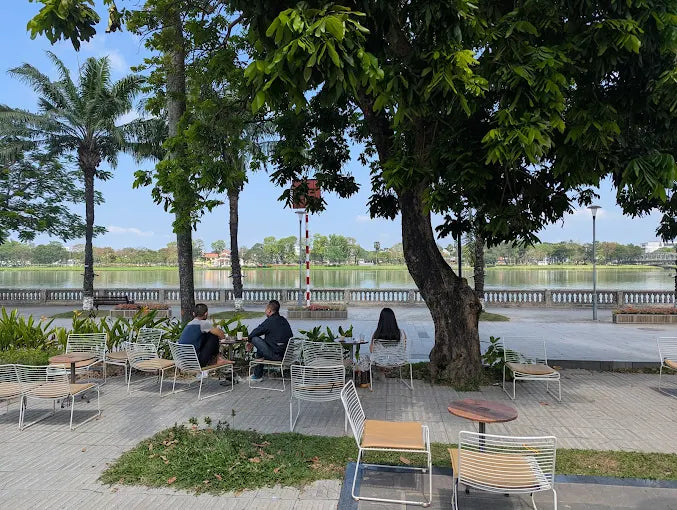
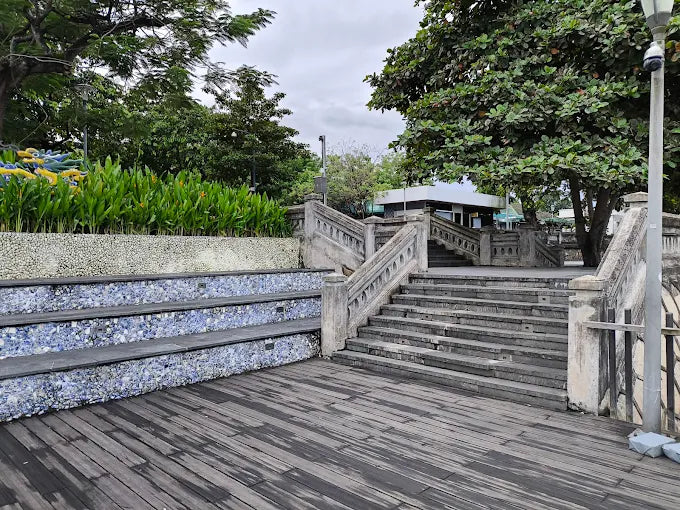
- Characteristics: Located right by the water's edge, directly connected to the lim wood pedestrian bridge on the Perfume River. This is a hub for cultural activities, handicraft stalls, and local cuisine.
2. Western Quarter (Chu Van An – Pham Ngu Lao – Vo Thi Sau)
This area is dubbed the "heart" of the ancient capital's nightlife, catering to a large number of domestic and international tourists.
- Location: Includes 3 main intersecting streets: Pham Ngu Lao, Chu Van An, and a section of Vo Thi Sau Street.
- Administrative Boundaries: Belongs to Vo Thi Sau Ward.
- Characteristics: Only operates on weekend evenings (Friday, Saturday, and Sunday). This is a space for bars, pubs, European-Asian restaurants, and vibrant street performances.
3. Hai Ba Trung Pedestrian Street
This is the newest pedestrian street, planned with modern commercial and service integration.
- Location: Stretches along Hai Ba Trung Street, from the Phan Dinh Phung intersection to Nguyen Hue Street.
- Administrative Boundaries: Belongs to Vinh Ninh Ward.
- Characteristics: Highlights include dazzling light displays, 3D mapping check-in areas, and the Cinestar cinema located directly on the street.
4. Riverside Pedestrian Street System (Integrated Axis)
Hue is completing an integrated pedestrian axis to create green spaces along the rivers:
- Pedestrian street along the Perfume River (North Bank): Runs along Tran Hung Dao and Le Duan Streets, passing in front of the Ngan and Quang Duc gates of the Imperial City.
- Pedestrian street along the Nhu Y River: Approximately 1.6km long, connecting from Dap Da (adjacent to the Perfume River) to Van Duong Bridge, passing through Gia Hoi and Vy Da Wards. This street creates a green scenic corridor connecting ancient residential areas with the tourist center.
5. Lim Wood Pedestrian Bridge
- Location: Situated between Truong Tien Bridge and Phu Xuan Bridge, paved with precious South African lim wood.
- Connection: Linked to Nguyen Dinh Chieu pedestrian street and Ly Tu Trong Park, forming a beautiful strip for sightseeing the Perfume River from the water.
Understanding the location of these streets will help you easily plan your itinerary, especially when combined with historical sites in the Imperial City like Ngo Mon Gate directly opposite on the North bank.
List of Administrative Units Near Hue Pedestrian Streets and Tourist Attractions
Hue's pedestrian street system is currently divided into two distinct areas on both banks of the Perfume River, managed by central administrative units. Below is a detailed list of wards and corresponding tourist attractions:
1. Southern Bank Area (Service and Entertainment Hub)
This area concentrates the most vibrant pedestrian streets, located within two key wards:
-
Vo Thi Sau Ward (Merged from former Phu Hoi and Phu Thuan Wards):
- Streets: Includes Nguyen Dinh Chieu pedestrian street, Lim Wood pedestrian bridge, and the "Western Quarter" (Chu Van An - Pham Ngu Lao - Vo Thi Sau).
-
Nearby Attractions:
- Truong Tien Bridge: The symbol of the ancient capital located right at the beginning of Nguyen Dinh Chieu street.
- Toa Kham Wharf: Where tourists board dragon boats to listen to Hue folk songs on the Perfume River.
- Tu Tuong Park & Phan Boi Chau Park: Green spaces displaying many artistic sculptures.
- Le Ba Dang Art Center & Diem Phung Thi: Modern art museum spaces located along Le Loi street.
-
Vinh Ninh Ward:
- Streets: Hai Ba Trung pedestrian street (section from Nguyen Hue to Phan Dinh Phung).
-
Nearby Attractions:
- Quoc Hoc High School & Hai Ba Trung High School: Two ancient schools with distinctive French architecture.
- Provincial Children's Cultural House: Located near the Nguyen Hue intersection.
- Cinestar Cinema: Modern entertainment venue right on the pedestrian street.
2. Northern Bank Area (Heritage and Cultural Space)
This area is characterized by scenic walking, closely linked to the Imperial City's relics system, and managed by:
-
Dong Ba Ward (Merged from former Phu Hoa and Phu Cat Wards):
- Streets: Pedestrian street along the Perfume River (Tran Hung Dao street side) and Thuong Bac Park area.
-
Nearby Attractions:
- Dong Ba Market: The largest and oldest market in Hue.
- Gia Hoi Bridge: Connects to the Gia Hoi ancient town area.
- Sunflower garden (seasonal): Often planted in the riverside park area in front of the Ngan Gate.
-
Thuan Hoa Ward & Phu Xuan Ward:
- Streets: Internal pedestrian axes around the Imperial City (23 Thang 8 Street, Le Huan Street, Dang Thai Than Street).
-
Nearby Attractions:
- Ngo Mon Gate & Imperial Citadel: The heritage epicenter located right next to the North bank pedestrian axis.
- Kỳ Đài (Flag Tower) & Ngo Mon Square: Where major festivals take place.
- Hue Royal Antiquities Museum: Located on Doan Thi Diem Street.
3. Inter-Ward Connection Points
- Lim Wood Bridge: Runs along the edge of the Perfume River, connecting the space from Truong Tien Bridge to Phu Xuan Bridge, passing through Vo Thi Sau and Vinh Ninh Wards.
- Dap Da: Connects the Nhu Y Riverside pedestrian street (Gia Hoi Ward) with the city center (Vo Thi Sau Ward).
The distribution of pedestrian streets linked to these administrative units makes it easy for tourists to combine walking with visiting historical sites and experiencing the unique cuisine of each area. The Southern bank area leans towards modern entertainment, while the Northern bank focuses on heritage value and peaceful spaces.
History & Development – From Footpaths to Urban Heritage
Previously, the riverside paths were just simple footpaths for local residents. With a vision for sustainable tourism development, the government has invested in modern lighting equipment, paving stones, precious wood, and vibrant flower decorations. Today's pedestrian streets are not just infrastructure projects but have become part of the urban heritage, demonstrating the effort to preserve the beauty of Hue's ancient capital in the new era.
Economy & Culture – A Lever for Nightlife
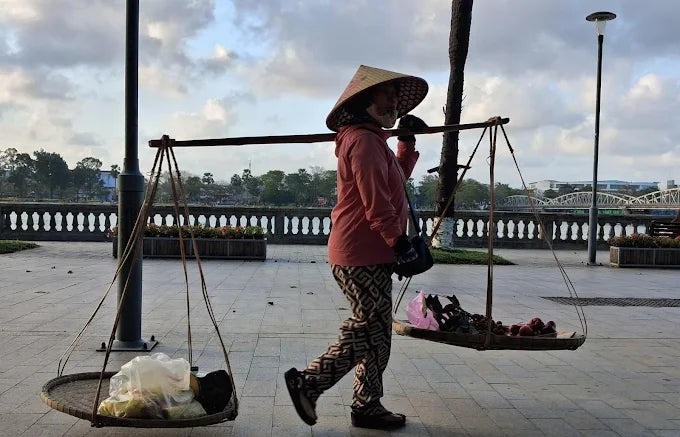
The pedestrian street system has created a strong "night economy" for Hue. Thousands of businesses, from luxurious restaurants to street vendors run by local women, all benefit. This is also a venue for art exhibitions, traditional music performances, and an open stage for young artists, contributing to the preservation of the poetic and performing arts values of the ancient capital.
Reference Prices & Operating Hours (Updated 2026)
Strolling is completely free, but you might consider the costs for accompanying services:
|
Street |
Operating Hours |
Cost Notes (VND) |
|
Western Quarter |
Fri, Sat (6 PM-2 AM); Sun (6 PM-12 AM) |
Parking: 5,000 - 10,000 |
|
Nguyen Dinh Chieu |
Every evening of the week |
Street food: 10,000 - 50,000 |
|
Lim Wood Bridge |
Open 24/7 |
Free photography |
|
Imperial City Street |
Fri, Sat (7 PM-11 PM) |
Traditional costume rental: 100,000 - 200,000 |
|
Dragon Boat |
Per trip (view from pedestrian street) |
100,000 - 150,000 / person |
Weather & Ideal Time to Visit
The dry season (March to September) is the best time to stroll the pedestrian streets. Summer evenings with a cool breeze from the Perfume River will dissipate the heat. Especially if you visit during the Hue Festival, these streets become vibrant festival stages with international parades.
Transportation to the Pedestrian Streets
- Walking: If you stay at hotels in the central Dong Da or Phu Hoi wards, it only takes a few minutes to reach the pedestrian street.
- Bicycle: Hue has a convenient bicycle-sharing system (Blue-zone) for cycling along the riverside streets.
- Cyclo: A romantic option for couples who want to view the pedestrian street from afar before joining the crowds.
Street Food – A Paradise for the Palate
Don't miss the special snacks while strolling here:
- Hue Sweet Soups (Che Hue): All kinds of sweet soups from lotus seed, pomegranate seed to the unique roasted pork sweet soup.
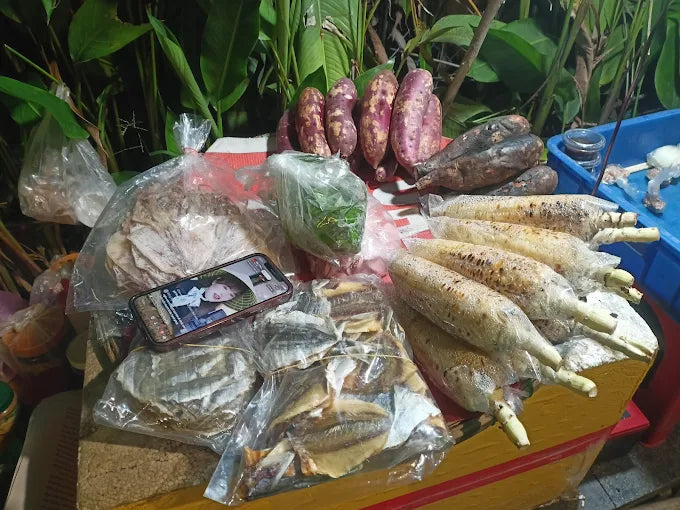
- Banh Ep (pressed cakes), Banh Trang Nuong (grilled rice paper): The "divine" snacks of Hue's youth.
- Hot lotus tea: Sip a fragrant cup of tea by the Perfume River at night.
[Internal link suggestion to article: 'Unmissable Hue night food map']
Localtrips.ORG specializes in providing travel information for Hue's pedestrian streets
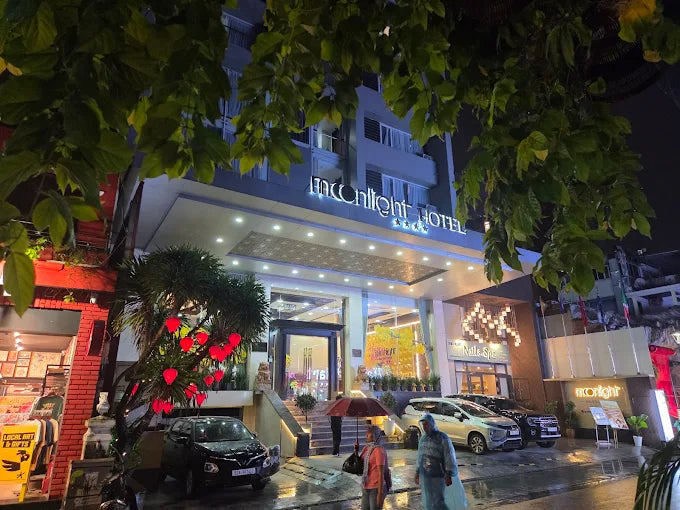
From an expert's perspective, LocalTrips.ORG advises you to keep a close watch on your belongings in the bustling Western Quarter. A practical tip is to try walking on the lim wood bridge early in the morning (around 5 AM); you will see a pristine beauty of the Perfume River that few tourists know about. We are always ready to update information on road closures, outdoor music events, and recommend hotels with direct views of the pedestrian streets for you to have the most complete experience.
Frequently Asked Questions (FAQ)
1. Are Hue's pedestrian streets completely car-free?
During official operating hours (usually from 6 PM or 7 PM), vehicles are prohibited from entering the main pedestrian streets to provide space for pedestrians.
2. Where is the most convenient place to park to access the pedestrian streets?
There are many self-managed parking lots and official parking lots around the Children's Cultural House area, Chu Van An street, or near the Quang Duc gate area (North side).
3. Are there public restrooms on these streets?
There are clean public restrooms located along Nguyen Dinh Chieu street and near the lim wood bridge area.
4. Are there activities for children here?
At Nguyen Dinh Chieu pedestrian street and the riverside area, there are often stalls for painting plaster statues, sand art, and traditional games like jump rope and o an quan (mandarin square capture) which are very fun for children.
5. What should I wear when going to the pedestrian street?
Active wear and athletic shoes are the number one choice. If you are going to the Imperial City pedestrian street, wearing a traditional ao dai will help you take photos that blend perfectly with the ancient atmosphere.
Conclusion
Hue's pedestrian streets are not just square meters of concrete or precious wood; they are places that hold smiles, impromptu music, and the love of the people for the legendary river. Strolling here, you will see a very different Hue – youthful, dynamic, yet retaining an unforgettable charm.
Valuable advice: Stop at a small riverside cafe, order a salt coffee, and watch Truong Tien Bridge light up; that is the moment you truly "touch" the soul of Hue.
Are you ready to hit the streets tonight?
- [Contact us to book a night tour of Hue]
- [Discover more exciting entertainment activities in Hue on LocalTrips.ORG]
- Please share your most beautiful moments on Hue's pedestrian streets in the comments section below!


Related collection
Explore collections containing this product


