
Hue Flag Tower
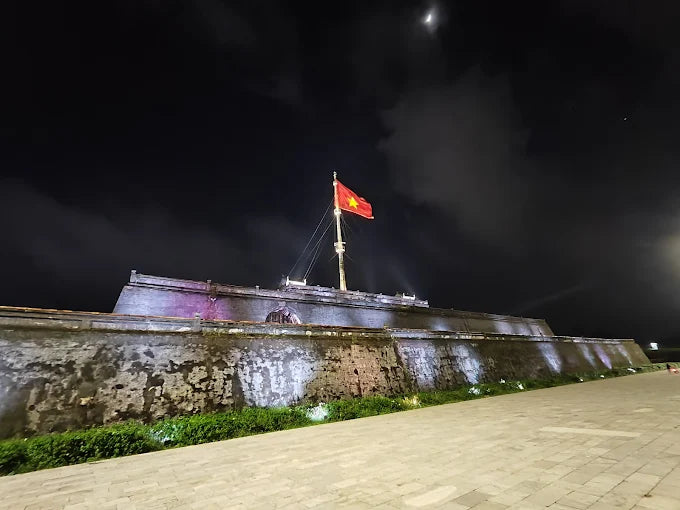
Ky Dai (Flag Tower) Hue: A Majestic Flag Amidst the Ancient Capital
Standing majestically in front of Ngo Mon Gate, overlooking the vast Ngo Mon Square, Ky Dai (also known as the Flagpole) is not only an important architectural work but also a proud symbol of the ancient capital. Through many historical changes, the image of the red flag with a yellow star fluttering atop Ky Dai has become an indelible mark in the hearts of every citizen and tourist visiting Thua Thien Hue.
Geographical Location – The Center of the Divine Axis
Ky Dai is located in the central position on the South face of the Imperial City, in Thuan Hoa Ward, Hue City. This is the starting point of the divine axis running through the most important structures within the Citadel.
From afar, visitors can easily spot Ky Dai due to its superior height and unique position facing the romantic Perfume River. The space around Ky Dai is Ngo Mon Square – where major provincial and national festivals take place.
Connecting Journeys: Ky Dai and Nearby Famous Destinations
Ky Dai (Flag Tower) is a symbol of the Nguyen Dynasty's power and a typical representation of the ancient capital of Hue. Located right at the front of the Imperial City, Ky Dai acts as "kilometer zero," connecting the heritage space inside the palace with the vibrant life of the city outside.
Below is a suggested itinerary connecting Ky Dai with nearby administrative units and famous attractions:
1. Geographical Location & Administrative Unit
- Address: Located on 23 Thang 8 Street, right in front of Ngo Mon Gate.
- Management Unit: Belongs to Phu Xuan Ward, Hue City.
- Features: Ky Dai consists of two parts: a three-tiered flag base made of stacked bricks and a flagpole. This is the highest point in the Imperial City's front area, visible from a great distance.
2. Key Heritage Sites (Within 200m radius)
Since it is located on the central divine axis of the Imperial City, from Ky Dai you only need a few steps to reach the following points:
- Ngo Mon Square: A vast open space right at the foot of Ky Dai, where major festivals like Hue Festival, the changing of the guard ceremony, and community cultural activities take place.
- Ngo Mon Gate: The main southern gate of the Imperial City, directly opposite Ky Dai across 23 Thang 8 Street.
- Thần Công Cannon System (Nine Holy Cannons): Nine bronze cannons symbolizing the protection of the dynasty, placed in two rows near the Ngan and Quang Duc gates (on either side of Ky Dai).
- Phu Van Lau & Nghenh Luong Dinh: Located directly on the axis with Ky Dai, facing the Perfume River. This was where important imperial documents were posted and where the king rested, enjoyed the cool breeze, and admired the river scenery.
3. Cultural & Service Connection Points
- Northern bank of Perfume River walking street: A pedestrian street along Tran Hung Dao Street and Thuong Bac Park, located directly in front of Ky Dai.
- Dong Ba Market: Approximately 1km east of Ky Dai. You can walk along the riverside park to reach Hue's busiest market.
- Hue Museum of Royal Antiquities: Located on Doan Thi Diem Street, just about a 5-7 minute walk from Ky Dai through Hien Nhon Gate.
- Perfume River: The legendary river directly in front of Ky Dai, where you can admire the illuminated flagpole reflecting on the water at night.
4. Suggested Itinerary "Heart of the Imperial City"
This itinerary helps you explore the core values of Hue's imperial architecture:
- Early morning: Check-in and take photos at Ky Dai when the sun rises to capture the entire flagpole and blue sky.
- Morning: Visit the Nine Holy Cannons -> Pass through Ngo Mon Gate to visit Thai Hoa Palace and the Imperial City.
- Lunch: Enjoy specialty bun bo (beef noodle soup) or banh khoai (savory pancake) in the nearby streets such as Dinh Tien Hoang or Nhat Le.
- Afternoon: Visit the Hue Museum of Royal Antiquities -> Stroll through Phu Van Lau and end with watching the sunset from the Lim Wood Walking Bridge looking towards Ky Dai.
The journey connecting from Ky Dai evokes a sense of solemnity and pride in national history, and it is an indispensable starting point for anyone visiting Hue for the first time.
Unique Architecture – Enduring Through Time
Built in 1807 under Emperor Gia Long and having undergone several major renovations, Ky Dai boasts a distinctive imperial military architectural beauty:
- Three-tiered structure: The flag platform consists of three truncated pyramid-shaped tiers stacked on top of each other, symbolizing Heaven - Earth - Humanity. The tiers are solidly built with brick and mortar, featuring surrounding railings.
- Flagpole: Originally made of lim wood, it was later replaced with reinforced concrete to ensure durability against the Central region's wind and rain. At the top is a pulley system for raising the flag.
- Cannon system: In front of Ky Dai is where the cannons were placed, demonstrating the defensive capabilities of the ancient court.
[Image: Majestic Ky Dai with the red flag with yellow star fluttering against the blue sky - Alt text: Ky Dai Imperial City Hue]
Historical Witness – Glorious Milestones
Ky Dai has witnessed many significant national events:
- Nguyen Dynasty: It was where the imperial flag was hoisted, signaling Tet holidays or important events.
- 1945: On August 30, 1945, the abdication ceremony of Emperor Bao Dai took place here, marking the end of Vietnam's feudal system. The red flag with a yellow star was officially raised atop Ky Dai for the first time.
- Mau Than Offensive 1968: Ky Dai was a strategic high point where our troops planted the liberation flag, asserting the resilient will of the Hue army and people.
"Lighting Up Ky Dai" Experience at Night
One of the most unique experiences today is watching the "Lighting Up Ky Dai" ceremony. With its modern LED lighting system and cannon fire displays (during major festivals), Ky Dai becomes dazzling and splendid in the ancient capital's night, creating a magical and proud atmosphere.
Visitor Information & Estimated Prices (Updated 2026)
Ky Dai is located in the area in front of Ngo Mon Gate; visitors can visit and take photos in the outer area for free:
|
Information Type |
Details |
Estimated Price (VND) |
|
Entrance Fee |
Taking photos outside |
0đ |
|
Parking |
Parking lot near Ngan/Quang Duc Gate |
5,000 - 10,000 / visit |
|
Changing of the guard ceremony |
Held periodically in the morning |
Free to watch |
|
Traditional costume photography |
Ao dai/Nhat Binh rental |
150,000 - 300,000 / set |
Visitor Tips from LocalTrips.ORG
- Best time for photos: Early morning when the sun shines directly on the front of Ky Dai, or late afternoon when the electric lights begin to turn on.
- Check-in location: You can stand in the middle of Ngo Mon Square to get a panoramic view of Ky Dai, or go close to the foot of the flag platform to take photos with the cannons.
- Attire: Traditional ao dai or ancient costumes will be perfectly suited to the solemn, ancient setting here.
FAQ
1. Can I climb to the top of Ky Dai?
Typically, the area above the flag platform is only for management staff and ceremonial units. Visitors are only allowed to visit and take photos in the courtyard and at the foot of the flag platform.
2. What is the size of the flag on Ky Dai?
The flag at Ky Dai is very large (usually 8m x 12m) to ensure visitors can see it clearly from a distance.
3. Can Ky Dai be combined with other attractions?
Definitely the Imperial City, as Ky Dai is located directly in front of it. Additionally, you can walk to the nearby Hue Museum of Royal Antiquities.
4. When do the cannons at Ky Dai fire?
The firing ceremony usually only takes place during major festivals such as the Hue Festival or national holidays to serve tourists and locals.
Conclusion
Ky Dai is not just a flagpole; it is the "heart" of the imperial city, a symbol of the nation's enduring strength and vitality. Standing before Ky Dai, our national pride is multiplied manifold.
LocalTrips' tip: Take some time to stroll through Ngo Mon Square in the evening, and you'll see Ky Dai magnificently beautiful and proud under the colored lights.
Are you ready to capture beautiful moments beside this historic flagpole?
- [Contact LocalTrips.ORG for advice on walking tours to explore the Hue Imperial City]
- [Learn more about the military relics of the Nguyen Dynasty on our page]
- Share your most "proud" photo with Ky Dai!


Related collection
Explore collections containing this product


