



Dong Khanh Tomb (Tu Lang): A Unique East-West Fusion
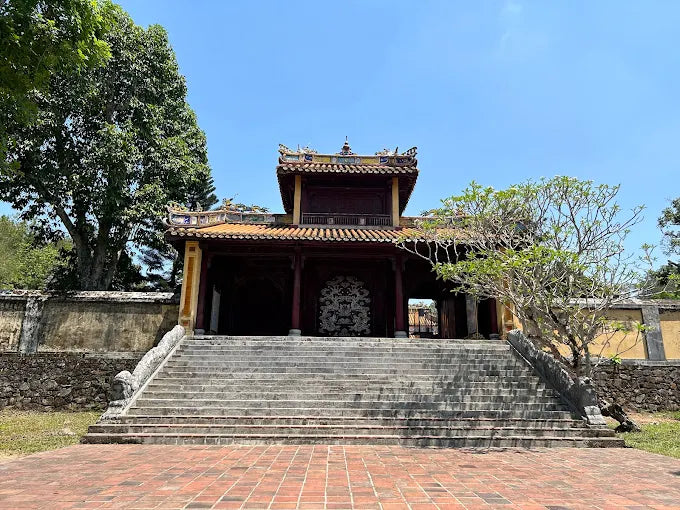
Among the tombs of the Nguyen Dynasty, Dong Khanh Tomb (also known as Tu Lang) stands out with a completely distinct character. This is a work that marks a turning point in Hue imperial architecture, where traditional East Asian values began to blend with new influences from Western culture.
Location & Directions
The tomb is located in Thuong Hai Hamlet, Thuy Xuan Ward, Hue City, situated between the tombs of Emperor Thieu Tri and Emperor Tu Duc.
- Route: From the city center (Dong Da ward area), follow Bui Thi Xuan street, then turn into Huyen Tran Cong Chua street. After passing Tu Duc Tomb by about 100m, look to your left to see the sign indicating the entrance to Dong Khanh Tomb.
- Transportation: A motorbike is the ideal choice for you to leisurely admire the peaceful scenery of Thuy Xuan village and the vibrant incense stick shops along the way.
Famous Nearby Attractions to Dong Khanh Tomb
Dong Khanh Tomb (Tu Lang) is located in Thuong Ba hamlet, Thuy Xuan commune, Hue city. This is a unique architectural work, marking the transition between traditional imperial architecture and the influence of Western culture.
As it is located in the "valley of tombs" in Thuy Xuan ward, from Dong Khanh Tomb, you can easily connect to the following famous sites:
1. Adjacent Royal Monuments
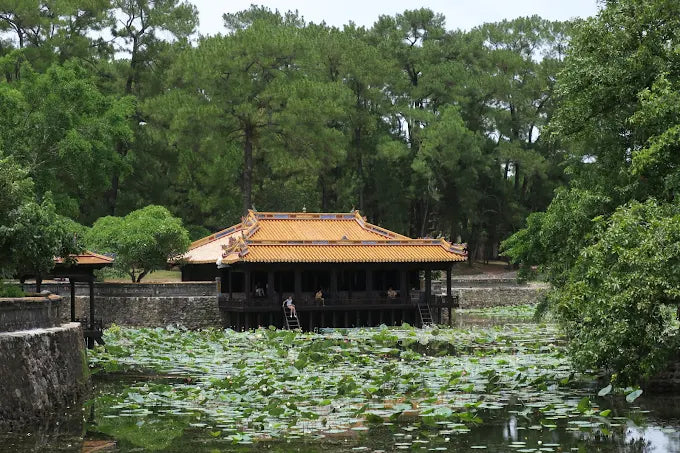
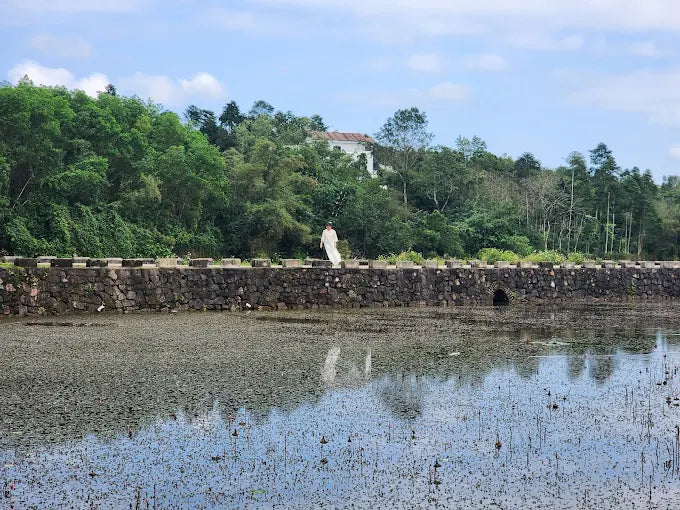
- Tu Duc Tomb (Khiem Lang): Located next to Dong Khanh Tomb. This is one of the most beautiful tombs of the Nguyen Dynasty with a romantic space like a large park, featuring a lake, small islands, and elaborate altars.
- Kien Thai Vuong Tomb: Located directly in front of Dong Khanh Tomb. This is the place of worship for the father of three emperors: Kien Phuc, Dong Khanh, and Ham Nghi, with strong traditional temple architecture.
2. Check-in Points and Traditional Culture
- Thuy Xuan Incense Village: Located on the main road leading to the tomb (Huyen Tran Cong Chua street). This is a famous spot with its colorful incense bundles and the experience of making incense and conical hats with local people.
- Vong Canh Hill: About 1.5km from the tomb. This is an excellent spot to view the entire Perfume River winding its way and the tomb complexes from above, especially beautiful at sunset.
3. Sacred Spiritual Spaces
- Tu Hieu Pagoda: Within a radius of about 2km. This pagoda is famous for its tranquility, associated with the story of filial piety, and is the resting place of Nguyen Dynasty eunuchs.
- Thien Lam Pagoda: A pagoda with characteristic white tower architecture of the Theravada Buddhist sect, located on Quang Te hill, about a 10-minute drive away.
4. Nature Exploration Points
- Thien An Hill & Thuy Tien Lake: Not far from the Thuy Xuan area. You can combine your journey to visit the monastery on the pine hill or explore the mysterious beauty of the abandoned water park.
- Thuy Xuan Garden Houses System: This area still preserves many ancient Rường houses with fruit gardens, creating a peaceful space characteristic of the Hue suburbs.
Suggested Itinerary:
Thuy Xuan Incense Village -> Tu Duc Tomb -> Dong Khanh Tomb -> Tu Hieu Pagoda -> Vong Canh Hill.
This itinerary helps you fully enjoy the artistic beauty, history, and natural landscape of the southwestern part of Hue City.
Special History of Formation
Dong Khanh Tomb is a construction with a record-breaking construction period spanning 4 reigns (from 1888 to 1923):
- Initially, Emperor Dong Khanh ordered the construction of Truy Tu Palace to worship his father. However, the emperor passed away suddenly at the age of 25 before the work was completed.
- Emperor Thanh Thai later renamed Truy Tu Palace to Ngung Hy Palace to worship Emperor Dong Khanh.
- It was not until the reign of Emperor Khai Dinh (son of Emperor Dong Khanh) that the tomb complex was built on a large scale and completed to its present appearance.
Unique "Neo-Classical" Architectural Fusion
The uniqueness of Tu Lang lies in the distinct architectural styles between its two main areas:
1. Main Temple Area (Ngung Hy Palace)
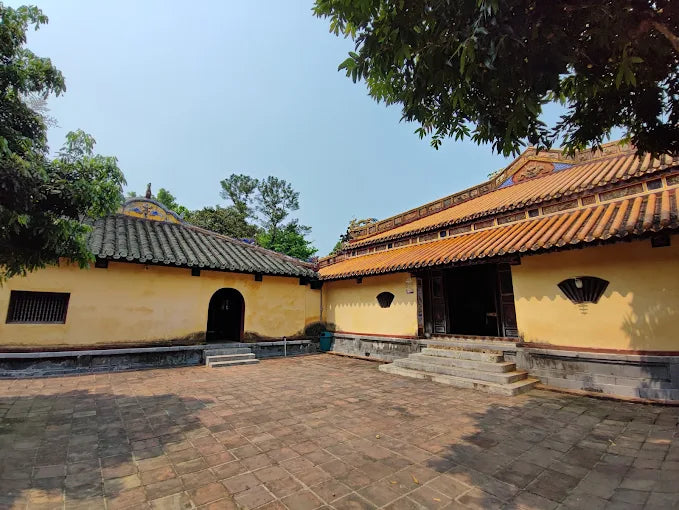
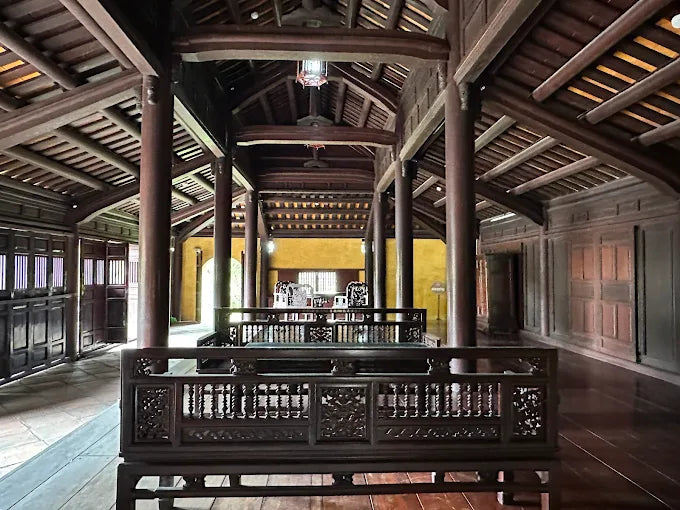
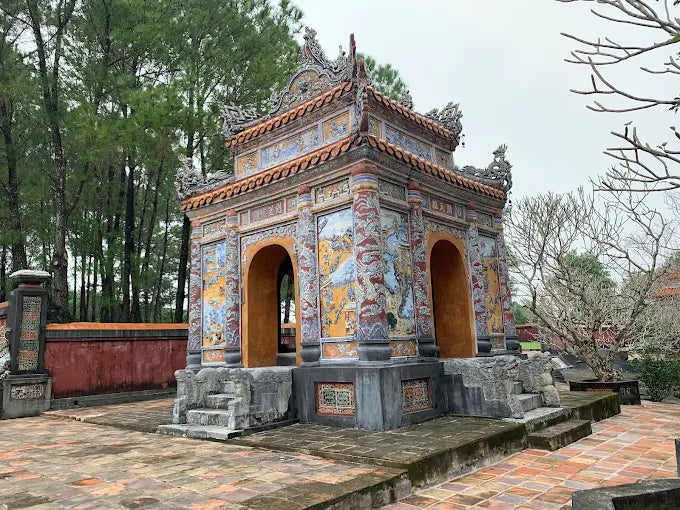
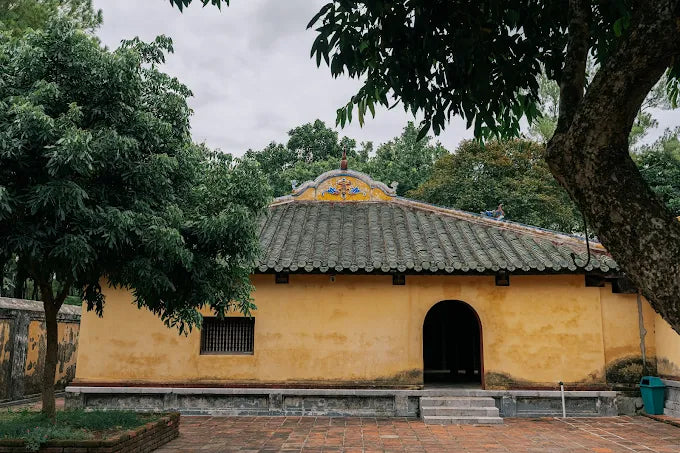
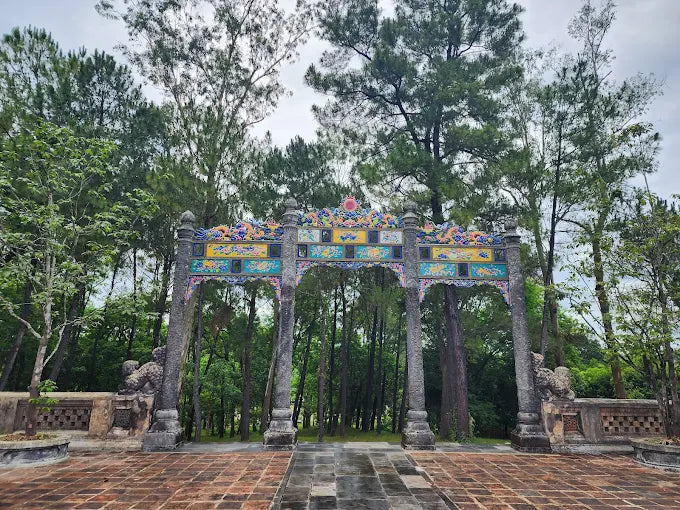
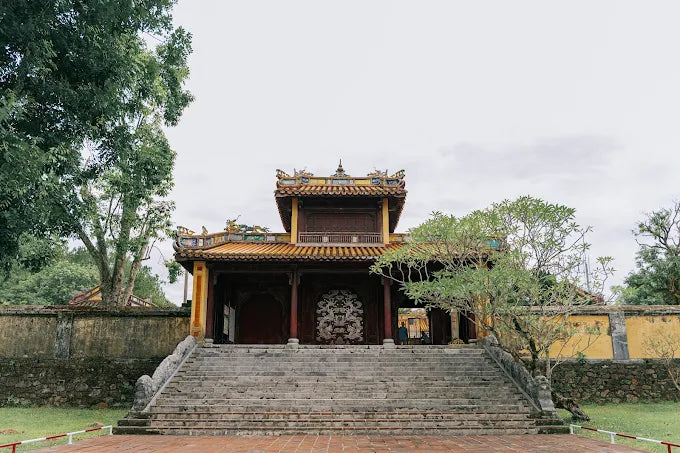
This area features rich traditional architecture with a "trùng thiềm điệp ốc" (double-eaved and stacked-roof) structure. It is considered a place that preserves the most splendid gilded and lacquered artwork in Vietnam.
- Highlight: Terracotta reliefs with folk themes such as "fisherman gaining profit" and "fighting cocks" are skillfully incorporated into the imperial setting.
- Western elements: The presence of colorful stained-glass windows and paintings depicting the Franco-Prussian War during Napoleon's era creates a strikingly unconventional style.
2. Tomb Area
In contrast to the main temple area, the tomb complex is almost entirely "Europeanized":
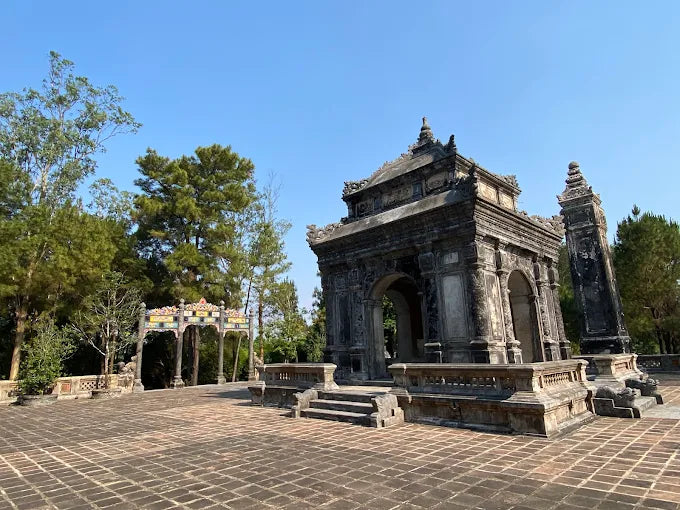
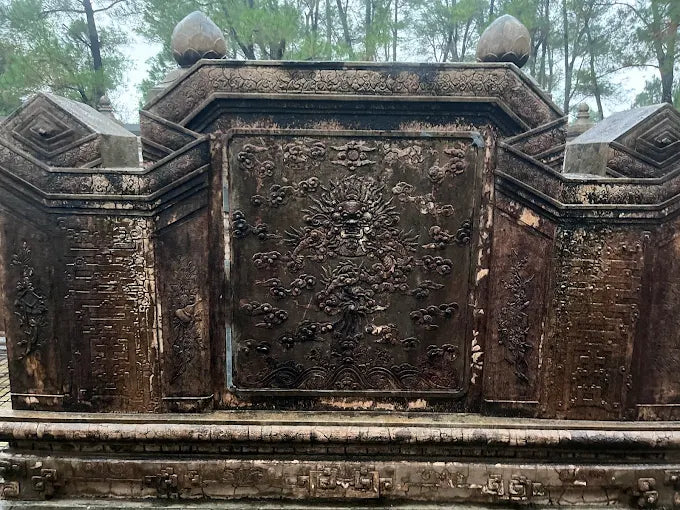
- Materials: Cement, checkered tiles, and ardoise tiles (black slate tiles) are used instead of traditional materials.
- Details: The railing system, columns, and bi dinh (stele house) bear the characteristics of Romance architecture blended with East Asian style. Even the statues of mandarins in the Bai Dinh courtyard are molded from cement with a tall, thin, and more modern appearance compared to previous tombs.
[Image: Ngung Hy Palace resplendent with gilded and lacquered art - Alt text: Architecture of Ngung Hy Palace, Dong Khanh Tomb]
Visitor Information (Updated 2026)
Dong Khanh Tomb has been renovated and is now open to visitors with the following specific information:
|
Item |
Details |
Reference Price (VNĐ) |
|
Adult ticket price |
Uniformly applied |
100,000 / visit |
|
Children ticket price |
Under 12 years old |
Free |
|
2-site Combo |
Tu Duc + Dong Khanh Tombs |
200,000 / ticket |
|
Opening hours |
Daily |
7:30 AM – 5:00 PM |
Ideal Time to Visit
- Spring (January - March): Cool weather, lush greenery, and a very fresh, tranquil atmosphere around the tomb.
- Early morning: When the first rays of sunlight pierce through the pine needles, illuminating the moss-covered walls, you will feel the solemn beauty of history.
FAQ
1. Is Dong Khanh Tomb located within the Tu Duc Tomb complex?
Dong Khanh Tomb is very close to Tu Duc Tomb (only a few minutes' walk). Therefore, you should buy a combo ticket to conveniently visit both sites in the same half-day.
2. Why is it called a "family sentiment" tomb?
Because around Dong Khanh Tomb is a complex of tombs of close relatives: the tomb of his father (Kien Thai Vuong), the tombs of his wives (Thanh Cung, Tien Cung), and the tomb of his son (Emperor Khai Dinh is also nearby on the way to Minh Mang Tomb).
3. What are the dress code requirements for visiting?
As this is a solemn place of worship, you should wear modest, respectful clothing (long pants, sleeved shirts). Avoid making noise inside Ngung Hy Palace.
Conclusion
Dong Khanh Tomb is not just the resting place of an emperor, but also a unique work of art reflecting the cultural fusion between two centuries. The splendid beauty of Ngung Hy Palace and the modern features of the tomb complex will surely give you new perspectives on the history of the Nguyen Dynasty.
Advice from LocalTrips: Don't forget to visit the traditional incense making workshops in Thuy Xuan village right near the tomb entrance for some colorful souvenir photos!
Would you like to include Dong Khanh Tomb in your journey to explore the Imperial City?
- [Contact LocalTrips.ORG to book an in-depth tour guide about Nguyen Dynasty history]
- [Find the most economical combo tickets for Hue historical sites in 2026]
- Please share your feelings about the East-West fusion at this special tomb!


Related collection
Explore collections containing this product


