



Tu Dam Pagoda: A Historical and Spiritual Landmark in the Heart of the Ancient Capital
If pagodas like Tu Hieu embody the tranquil beauty of pine forests, Tu Dam Pagoda stands as a majestic "historical witness" in the heart of the city. As one of the most important ancestral pagodas of Central Vietnamese Buddhism, Tu Dam is not only a sacred place of worship but also a symbol of dedication and solidarity. LocalTrips.ORG will take you on a journey to explore this pagoda, deeply marked by its era.
Geographical Location of Tu Dam Pagoda – Situated in the Urban Area
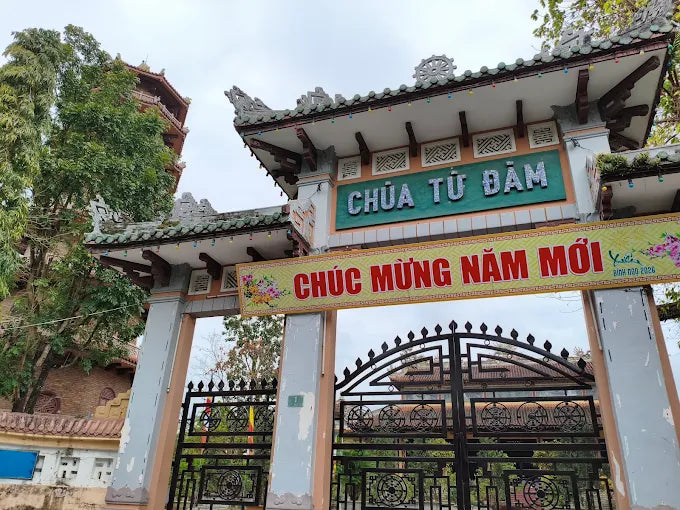
The pagoda is located at 1 Su Lieu Quan Street, Truong An Ward, Hue City, Thua Thien Hue Province. Situated on the street named after the eminent Zen master who founded the Lieu Quan Zen lineage, the pagoda enjoys a prime location, very close to the city center while maintaining its necessary solemnity.
The pagoda's elevated position, facing south, creates an airy space within the urban environment. This convenient location allows visitors to easily combine a visit to the pagoda with other relics such as Nam Giao Esplanade or the central Imperial Citadel area.
List of Administrative Units Near Tu Dam Pagoda, Hue and Famous Landmarks
Tu Dam Pagoda is one of the most significant Buddhist symbols of Hue, not only spiritually but also as a historical witness through many eras. Situated on a dry hill, the pagoda is strategically located at the intersection of the central administrative area and the heritage routes west of the city.
1. Administrative location and management
Tu Dam Pagoda is located in an area of low hills, part of the core heritage and spiritual region of the Ancient Capital:
- Address: 01 Su Lieu Quan Street, Truong An Ward, Hue City.
- Prime location: The pagoda is situated at the intersection of Phan Boi Chau, Dien Bien Phu, and Su Lieu Quan streets. This is the gateway leading to Nam Giao Esplanade and the royal tombs.
- Local unit: Under the management of residential groups within Truong An Ward, a quiet area with many traditional garden houses and ancient pagodas.
2. Nearby administrative units and organizations
Truong An Ward is home to many important religious, educational, and medical facilities:
- Truong An Ward People's Committee: The local administrative body, located nearby on Phan Boi Chau Street.
- Vietnam Buddhist Academy in Hue: Part of the complex of pagodas near Tu Dam, it is the largest Buddhist training center in the Central region.
- Hue City Medical Center: Located on Nguyen Hue/Phan Boi Chau Street, just a few minutes away from the pagoda.
- System of ancestral pagodas: Surrounding Tu Dam Pagoda is a "network" of large pagodas such as Bao Quoc Pagoda, Quang Te Pagoda, Thuyen Ton Pagoda, creating a dense spiritual and cultural space.
3. Famous landmarks "a few steps" from Tu Dam Pagoda
From the pagoda's location, visitors can easily walk or take a short trip to famous attractions:
- Bao Quoc Pagoda: Just a short slope away (Bao Quoc Street). This is a famous national pagoda with Ham Long well and a long-standing Buddhist education center.
- Nam Giao Esplanade: Located at the end of Dien Bien Phu Street (about 1.5km away). This is where the Nguyen emperors held annual ceremonies to worship heaven and earth.
- Phan Boi Chau Memorial House: Located on Phan Boi Chau Street, preserving artifacts and the tomb of the famous patriot.
- An Cuu River: Flows parallel to Phan Chu Trinh Street at the foot of the hill, carrying the characteristic serene beauty of Hue.
- Hue Railway Station: About 1km northeast of the pagoda, it is a beautiful French colonial architectural structure worth visiting and photographing.
4. Convenient travel connection point
The location of Tu Dam Pagoda in Truong An Ward is ideal for starting tours:
- Dien Bien Phu Street: This is a straight road leading from Huong River to Nam Giao Esplanade, shaded by green trees and very airy.
- Specialty cuisine: The area around the pagoda (especially Dien Bien Phu and Phan Boi Chau streets) is famous for the best vegetarian rice restaurants, banh beo, nam, and loc in Hue.
- Transportation: Visitors can easily use cyclos to travel between Tu Dam Pagoda, Bao Quoc Pagoda, and Phan Boi Chau Memorial House as the distance between these points is very short.
The combination of its location in Truong An Ward and its "hilltop" position makes Tu Dam Pagoda always the first stop for those who want to learn about the soul of Buddhism and the history of struggle in the Imperial land.
Prominent Attractions at the Pagoda – Ancestral Pagoda Architecture
The architecture of Tu Dam Pagoda is a harmonious blend of traditional pagoda style and modern thinking:
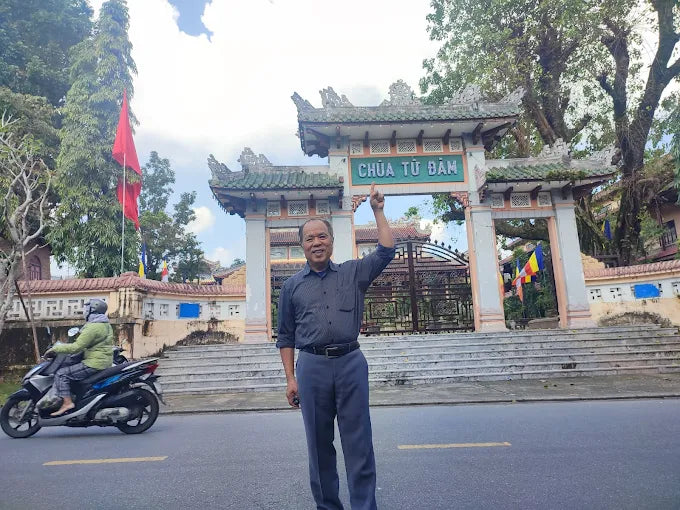
- Triple Gate (Tam Quan): Majestic and ancient, it is the entrance to a meditative space completely separated from the urban hustle and bustle.
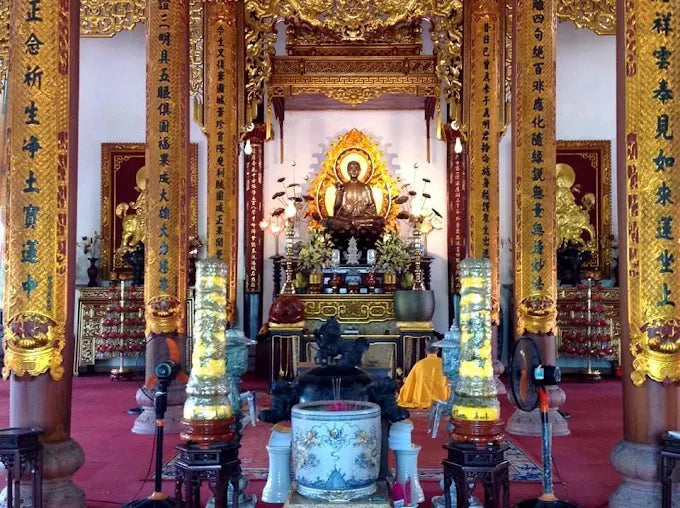
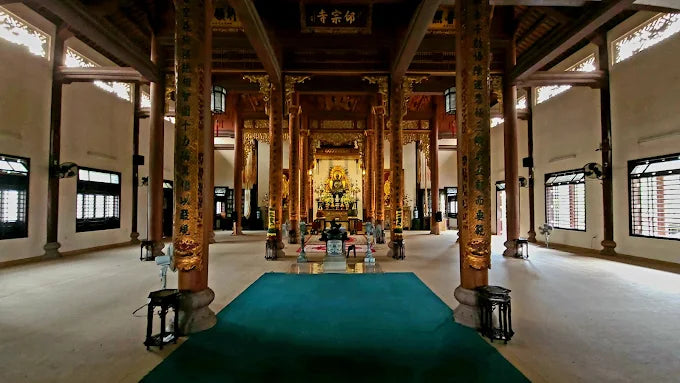
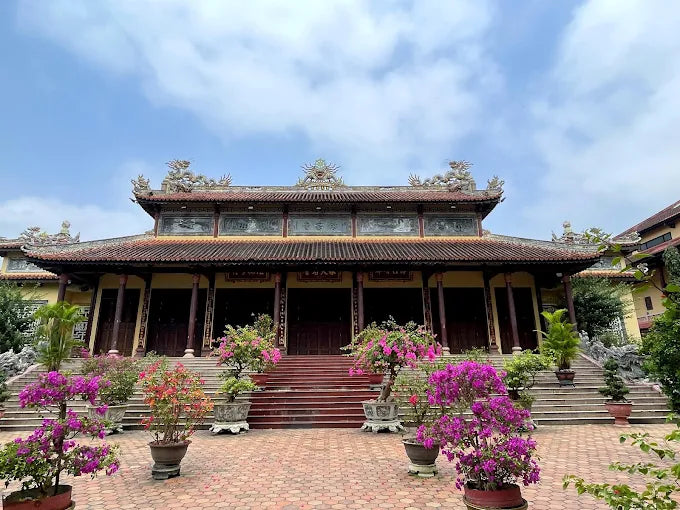
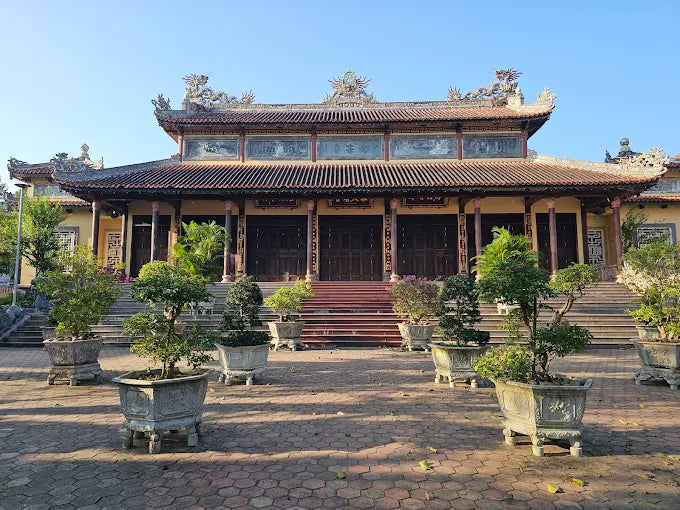
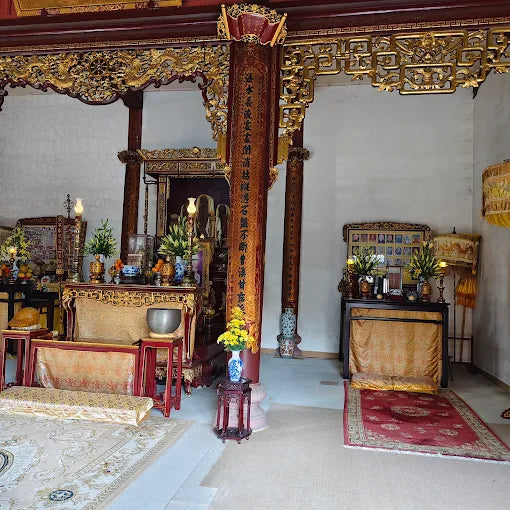
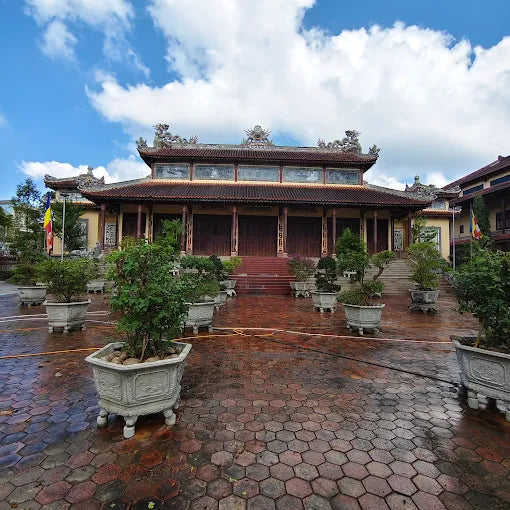
- Main Hall (Dai Hung Buu Dien): A typical building constructed in the "revival architecture" style, combining traditional curved roofs with modern concrete construction techniques. Inside, it houses a statue of Shakyamuni Buddha sitting in meditation on a lotus throne.
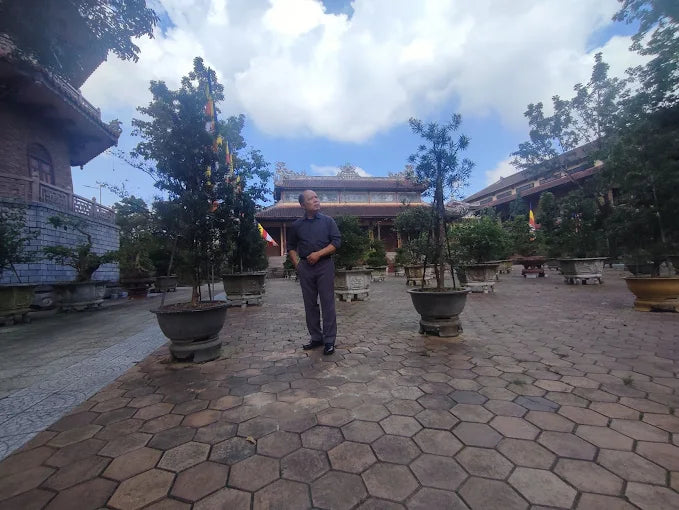
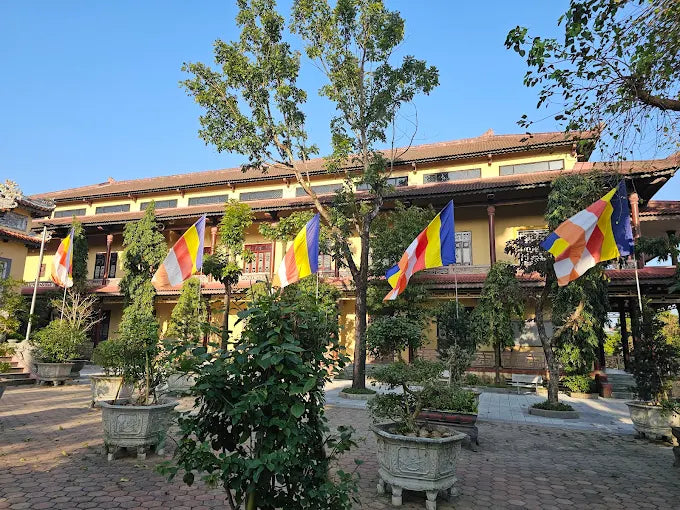
- Green grounds: Ancient frangipani and bodhi trees provide shade year-round, making it an ideal place for monks, nuns, and Buddhists to meditate or stroll in peace.
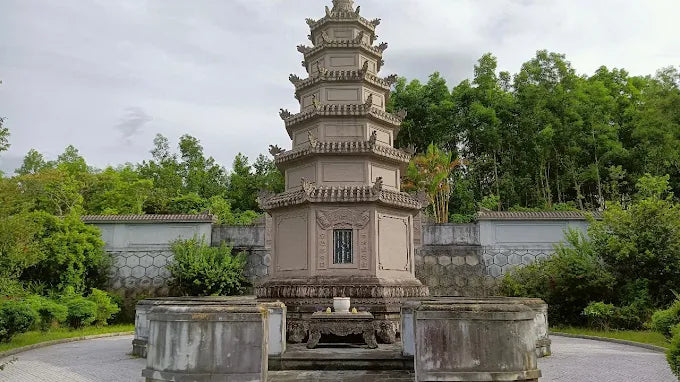
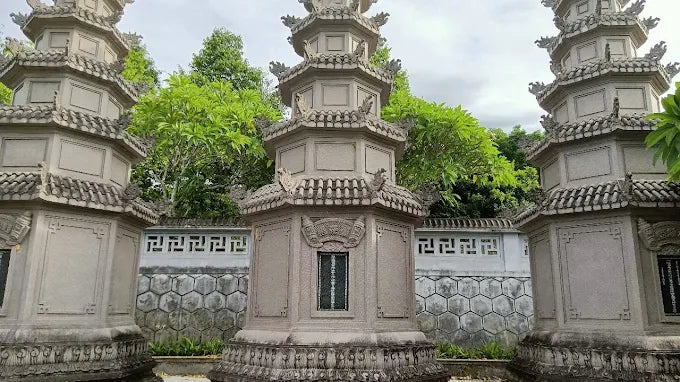
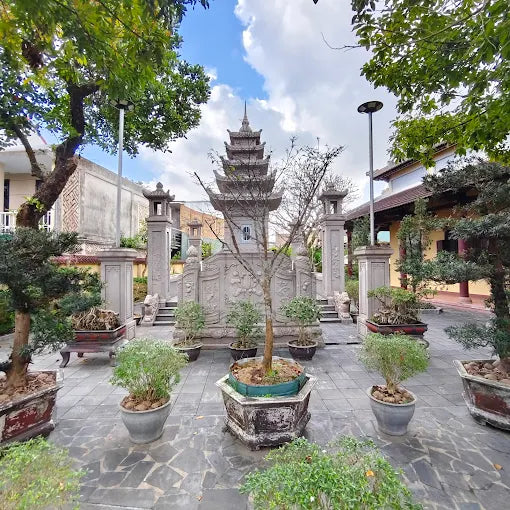
- Monuments and historical spaces: Preserving the imprints of the Central Vietnamese Buddhist movement, recalling the ups and downs of modern Vietnamese history.
[Image: Dai Hung Buu Dien with unique revival architecture - Alt text: Architecture of Tu Dam Pagoda in Hue]
History of Tu Dam Pagoda – The "Cradle" of the Buddhist Revival Movement
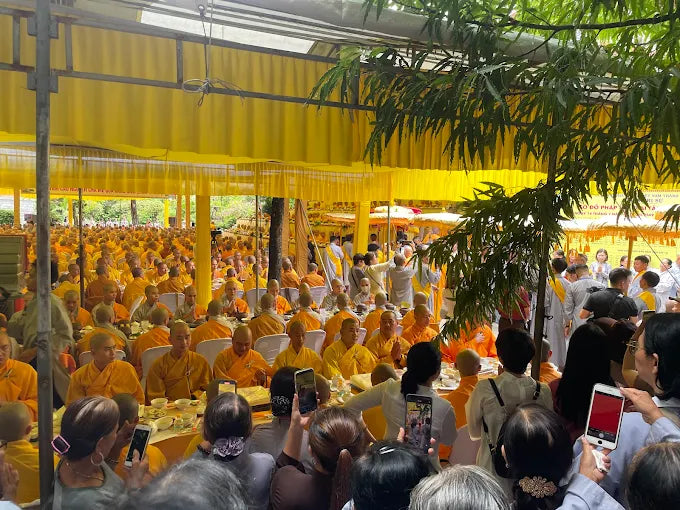
Established in the 17th century, the pagoda was originally named An Ton. In 1938, it was officially renamed Tu Dam. This is considered the "cradle" of the Central Vietnamese Buddhist revival movement. Throughout its long history, Tu Dam has been a gathering place for many eminent high monks, serving as a center for directing Buddhist activities and advocating for religious equality. The pagoda's glorious history is intertwined with the patriotic spirit and desire for peace of Vietnamese monks, nuns, and Buddhists through various periods.
Economy & Tourism – Urban Spiritual Center
Tu Dam Pagoda is not only a spiritual destination but also a major cultural center in Hue. Festivals, Buddhist photo exhibitions, and scientific seminars are regularly organized here, contributing to the promotion of high-quality spiritual tourism. The pagoda's presence also helps beautify the urban landscape, maintaining a balance between economic development and cultural heritage preservation.
Visiting Information & Ceremony Times (Updated 2026)
The pagoda is always open to welcome visitors from all directions to worship and learn about its history:
|
Information Type |
Details |
Suggestions/Reference Price (VND) |
|
Entrance Fee |
Visiting & Worship |
0đ |
|
Weekday Ceremony Hours |
Early morning & Evening |
5:00 AM & 6:00 PM |
|
Parking |
Area outside the pagoda gate |
5,000 - 10,000 / visit |
|
Tour Guide |
Voluntary (contact office) |
Optional donation |
Weather & Ideal Visiting Time
You can visit Tu Dam Pagoda at any time of the year. The most ideal time is during major festivals such as the Vesak (4th lunar month), when Su Lieu Quan Street is adorned with vibrant lanterns and Buddhist flags. Additionally, early mornings offer the freshest and most tranquil atmosphere at the pagoda.
Transportation to Tu Dam Pagoda
- Taxi/Grab: The quickest and most comfortable way to reach the pagoda entrance.
- Motorbike: A popular choice for young travelers, easy to park and continue to other attractions like Nam Giao Esplanade.
- Cyclo: If you want a "slow" experience to soak in the atmosphere of Hue's streets before entering the sacred grounds.
Nearby Cuisine & Accommodation
Truong An Ward and its surrounding areas are famous for their simple vegetarian restaurants and traditional Hue dishes. You can easily find quiet homestays near the pagoda to experience the local way of life.
[Suggested internal link to article: 'Must-Visit Buddhist Pagodas in Hue']
Localtrips.ORG specializes in providing tourist information for Tu Dam Pagoda
From a professional perspective, LocalTrips.ORG recommends combining your visit to the pagoda with a stroll around the nearby Nam Giao Esplanade to fully appreciate the historical beauty. A practical tip is to take some time to learn about Zen Master Lieu Quan before visiting; you will find that the solemnity of this pagoda carries a profound depth of knowledge. We are always ready to provide information to ensure you have the most complete pilgrimage in Hue.
Q&A Section (FAQ)
1. Is photography allowed at Tu Dam Pagoda?
You can take photos of the gardens and architecture outside the pagoda. However, refrain from taking photos in the main ceremonial area inside the Dai Hung Buu Dien to maintain solemnity.
2. What is appropriate attire?
Like other pagodas, you should wear modest, polite clothing that covers your shoulders and extends below your knees.
3. Can I attend dharma talks at the pagoda?
Yes, the pagoda often holds dharma talks on Sundays or during major festivals. You should check the bulletin board at the pagoda gate for announcements.
4. Where are the best photo spots at the pagoda?
The view from below the Triple Gate looking up at the main hall, or the scene under the ancient bodhi trees in the pagoda courtyard are very impressive.
5. Which nearby attractions can be combined with a visit to Tu Dam Pagoda?
Nam Giao Esplanade and Tu Hieu Pagoda are two ideal destinations to combine within one visit.
Conclusion
Tu Dam Pagoda is a place that marks historical and spiritual values inseparable from the cultural identity of Hue. It is a destination for those who want to trace their roots and contemplate the connection between religion and life.
Valuable advice: Try visiting the pagoda on a full moon day, when the space is filled with moonlight and the quiet chanting of scriptures, and you will find an extraordinary sense of peace amidst the urban flow.
Are you ready to visit this historic ancestral pagoda?
- [Contact us for in-depth advice on your Hue pilgrimage itinerary]
- [Explore more Buddhist cultural heritage sites on LocalTrips.ORG]
- Don't forget to share your feedback after your visit!


Related collection
Explore collections containing this product


