
Ngo Mon Gate (Hue Imperial Citadel)
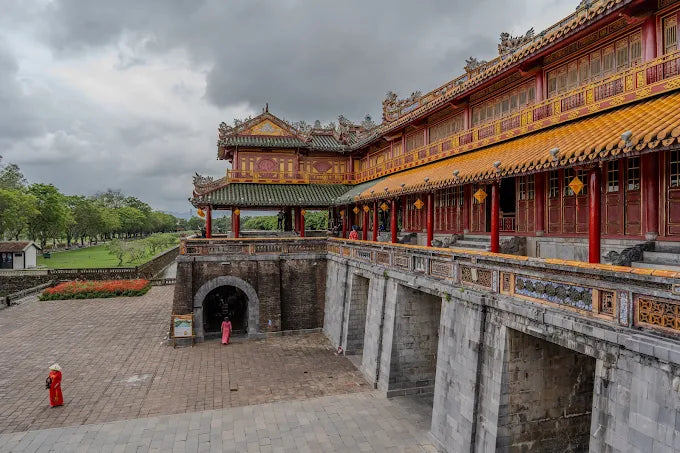
Ngo Mon (Hue Imperial Citadel): The Majestic Symbol of the Nguyen Dynasty
Within the complex of Hue Imperial City relics, Ngo Mon is not merely an entrance gate but also an architectural masterpiece, a "face" representing the majesty of the Nguyen Dynasty. Standing before Ngo Mon, visitors can't help but marvel at the skillful combination of rough bricks and the exquisitely carved wooden details of Ngu Phung Pavilion. The LocalTrips.ORG team will accompany you in deciphering the historical and artistic values at this iconic location.
Geographical Location of Ngo Mon – The Epicenter of the Imperial City
Ngo Mon is the most important architectural work, serving as the main southern gate of the Hue Imperial City, located on the sacred axis of the entire Imperial City system.
Specific Location Within the Imperial City Complex
The structure is located in the central position on the southern side of the Imperial City. With its "facing north, looking south" orientation, Ngo Mon is not only the main entrance but also the boundary separating the administrative area outside from the restricted palace space inside.
- In front: Facing the Flag Tower and Ngo Mon Square, looking straight out to the large flagpole and the poetic Perfume River.
- Behind: Is the Thai Hoa Palace area – where the most important grand court ceremonies of the Nguyen Dynasty took place.
- Central axis: Located on the sacred axis running straight through Trung Dao Bridge, Thai Hoa Palace, Can Chanh Palace, and the palaces behind, forming a straight line that demonstrates the emperor's power.
Significance of Location in Architecture and Feng Shui
Ngo Mon's location was carefully chosen according to the principles of feng shui and Confucianism during the feudal era:
- "Ngo" orientation: The name "Ngo Mon" means the gate located in the Ngo direction (South). According to Eastern beliefs, the emperor is the Son of Heaven, and when ruling the world, he must face south to listen to the breath of heaven and earth and the people.
- Power center: Placing Ngo Mon as the main gate leading to the emperor's workplace and living quarters affirms that this is the "heart" of the entire Imperial City. All major activities such as military reviews, the Ban Soc ceremony (calendar distribution), or important rituals took place here.
- Space connection: This location serves as an important "traffic node," connecting the open space of the Flag Tower with the enclosed, solemn space of the inner palace area, creating a subtle transition in court architecture.
Importance in Tourism Experience
Today, thanks to its prime location in the center of the Imperial City relic site, Ngo Mon is not only the first stop for tourists visiting the Imperial Citadel but also the most typical symbol of Hue's architecture. From this point, visitors can easily move to nearby areas such as The Mieu, Dien Tho Palace, or stroll along the moat system surrounding the Imperial City.
With this unique position, Ngo Mon continues to maintain its role as the soul of Hue architecture, witnessing the prosperity and changes of the last feudal dynasty in Vietnam.
List of administrative units under Phu Xuan Ward: Related Points to Ngo Mon, Hue Imperial City
Hue City is currently the administrative center of Thua Thien Hue province. According to the current administrative structure, Phu Xuan Ward (established by merging the former Phu Hoa and Phu Thuan wards) is where most of the Imperial City's space and key relics related to Ngo Mon are located.
Below are the administrative units and relic sites directly related to the Ngo Mon - Hue Imperial City area:
1. Direct Administrative Unit: Phu Xuan Ward
Phu Xuan Ward is the commune/ward-level administrative unit covering the entire southern face of the Imperial City. This area manages the locality with important adjacent points:
- Ngo Mon Area: Located directly on 23 Thang 8 Street.
- Ngo Mon Square: The open space in front of Ngo Mon Gate, where major cultural events of the province and nation take place.
- Ky Dai (Flag Tower): Located opposite Ngo Mon, within the administrative jurisdiction of the ward.
2. Surrounding Related Roads
These roads belong to the administrative boundaries of Phu Xuan Ward and neighboring wards in the inner city area, forming a network of transportation accessing Ngo Mon:
- 23 Thang 8 Street: The road running straight in front of Ngo Mon, connecting from Cua Ngan to Cua Quang Duc.
- Le Huan & Dang Thai Than Streets: Two roads surrounding the left and right wings of the Imperial City, helping visitors access auxiliary entrances near the Ngo Mon area.
- Doan Thi Diem Street: The road behind the Hue Royal Antiquities Museum area, near the Hien Nhon entrance.
3. Relic Sites Directly Connected to Ngo Mon
Within close proximity and also located on the sacred axis or the vicinity of Ngo Mon (belonging to Phu Xuan and Thuan Hoa wards):
- Thai Hoa Palace: Located right behind Ngo Mon after crossing Trung Dao Bridge.
- Thai Dich Lake: The system of lakes surrounding the path from Ngo Mon to Thai Hoa Palace.
- Ngu Phung Pavilion: The pavilion architecture above Ngo Mon Gate, where the emperor watched ceremonies.
- Ho Thanh Ha & Kim Thuy Ha System: The canals surrounding and protecting the front of Ngo Mon and the Imperial City.
4. Geographical - Administrative Role
Located in Phu Xuan Ward – the "heart" of the former imperial capital, the Ngo Mon area is not only a historical relic but also the center for organizing the Hue Festival. Understanding the boundaries of Phu Xuan Ward helps travel agencies and local authorities easily manage urban order, arrange parking spots, and guide the flow of visitors to the Imperial Citadel.
From a toponymic perspective, Phu Xuan Ward bears a name reminiscent of the historic Phu Xuan region – once the capital of Cochinchina and later the capital of the Tay Son Dynasty and the Nguyen Dynasty.
Unique Architecture of Ngo Mon – "Three Straight Gates, Two Curved Gates"
Built in 1833 under Emperor Minh Mang, Ngo Mon is divided into two main parts:
- Base Platform: Built with baked bricks and blue stone, nearly 5m high with a U-shaped plan. The platform has 5 entrances: the central gate (Ngo Mon) reserved for the Emperor; on either side are Ta/Huu Giap Mon for mandarins; the two outermost entrances are Ta/Huu Dich Mon for soldiers and elephants/horses.
- Ngu Phung Pavilion: A wooden masterpiece built on the base platform with 100 ironwood pillars. The pavilion roof is divided into 9 sections, covered with yellow (middle) and blue (surrounding) glazed tiles. From a distance, the pavilion looks like 5 phoenixes spreading their wings, creating a majestic yet graceful beauty.
[Image: Panoramic view of Ngo Mon Hue sparkling in the sunlight - Alt text: Architecture of Ngu Phung Pavilion at Ngo Mon Hue]
Historical Witness – From Golden Age to Independence
Ngo Mon was the venue for the most important ceremonies of the Nguyen Dynasty (1802 – 1945) such as the Ban Soc Ceremony (calendar distribution) and the Truyen Lo Ceremony (announcing successful PhD candidates). Notably, on August 30, 1945, right at Ngu Phung Pavilion, Emperor Bao Dai read his abdication edict, handing over the imperial seal and sword to the representative of the provisional government, marking the end of Vietnam's feudal regime. Despite numerous upheavals and the French colonial period, Ngo Mon has stood firm as a symbol of national will.
Economy & Tourism – Gateway to World Cultural Heritage
As a "must-visit" check-in point in Hue, Ngo Mon plays a key role in attracting tourists and boosting the local economy. The development of accompanying services such as virtual reality (VR) and artistic performances in the square has transformed this area into a vibrant cultural space, providing a stable source of income for relic restoration work.
Entrance Ticket Prices for Ngo Mon & Imperial Citadel (Updated 2026)
Note: Ngo Mon is the main gate to the Imperial Citadel, so you need to purchase a ticket to visit the Imperial Palace complex:
|
Ticket Type |
Details |
Ticket Price (VND) |
|
Adult |
Visitors 12 years and older |
200,000 / person |
|
Child |
Children 7 - 12 years old |
40,000 / person |
|
3-point Combo |
Imperial Citadel + Minh Mang + Khai Dinh |
420,000 / adult |
|
4-point Combo |
Imperial Citadel + Minh Mang + Tu Duc + Khai Dinh |
530,000 / adult |
|
Free |
Children under 7 years old and on special holidays |
0đ |
Weather & Ideal Time to Visit
Hue is most beautiful from January to April when the sun is not too intense. To take the best photos at Ngo Mon, you should visit around 8:00 - 9:00 AM when the early morning sun illuminates the vibrant yellow glazed tiles, or in the late afternoon to capture the sunset over the moss-covered city walls.
Means of Transportation to Ngo Mon
- Cyclo: The most refined and leisurely way to experience the city before entering the imperial palace.
- Motorbike/Bicycle: Suitable for young people who enjoy exploring the imperial city independently.
- Electric car: Professional transportation service that picks up and drops off visitors from parking lots directly to Ngo Mon Gate.
Nearby Cuisine & Accommodation
After visiting, tourists can stop by the pedestrian street next to the Imperial Citadel to enjoy royal tea, banh khoai (crispy pancake), or bun bo Hue (beef noodle soup). Hotels with classic architectural styles in the city center are perfect choices for enjoying the peaceful atmosphere of Hue at night.
[Suggested internal link to article: 'Top 10 most beautiful photo spots in Hue Imperial Citadel']
Localtrips.ORG specializes in providing travel information for Ngo Mon
From practical experience, LocalTrips.ORG suggests you bring a conical hat or umbrella because the square in front of Ngo Mon is very wide and has little shade. A practical lesson is to stand on the 2nd floor of Ngu Phung Pavilion looking towards the Flag Tower; you will feel the majesty of the position of "the king looking down at his subjects." We constantly update the latest information on opening hours, changing of the guard ceremonies, and discounted ticket policies to ensure your trip is always perfect.
Frequently Asked Questions (FAQ)
1. Can I visit Ngu Phung Pavilion?
Currently, visitors can go up to the 1st floor of Ngu Phung Pavilion to visit and admire the panoramic view of Ngo Mon Square from above.
Localtrips.ORG specializes in providing travel information for Ngo Mon
In the evening, Ngo Mon is illuminated by a stunning artistic lighting system. This is also when cultural activities often take place during the Hue Festival season.
3. Where can I buy tickets to enter Ngo Mon?
Ticket counters are located on both sides of Ngo Mon Gate. You should buy a combo ticket if you plan to visit additional tombs to save costs.
4. What should I wear when visiting Ngo Mon?
You should wear traditional attire (Nhat Binh, Ao Dai) to take impressive photos. Please note that clothing should be modest and not too short when entering sacred areas inside.
5. What time does the changing of the guard ceremony take place?
The changing of the guard ceremony usually takes place at 9:00 AM daily in the Ngo Mon area, recreating ancient court rituals very uniquely.
Conclusion
Ngo Mon is a symbol of eternity, a place where the architectural and historical essence of the nation converge. Standing under the roof of Ngu Phung Pavilion, one can see not only the beauty of bricks and tiles but also a proud historical flow of Hue.
Valuable advice: Don't just look at Ngo Mon from the outside; step through the main gate (the entrance reserved for the Emperor) to begin your journey to explore the mysterious imperial world within.
Are you ready to step through Ngo Mon Gate?
- [Contact us for advice on a 1-day Hue tour]
- [Learn more about Nguyen Dynasty relics at LocalTrips.ORG]
- Please share your feelings about Ngo Mon in the comments section!


Related collection
Explore collections containing this product


